Steel edging
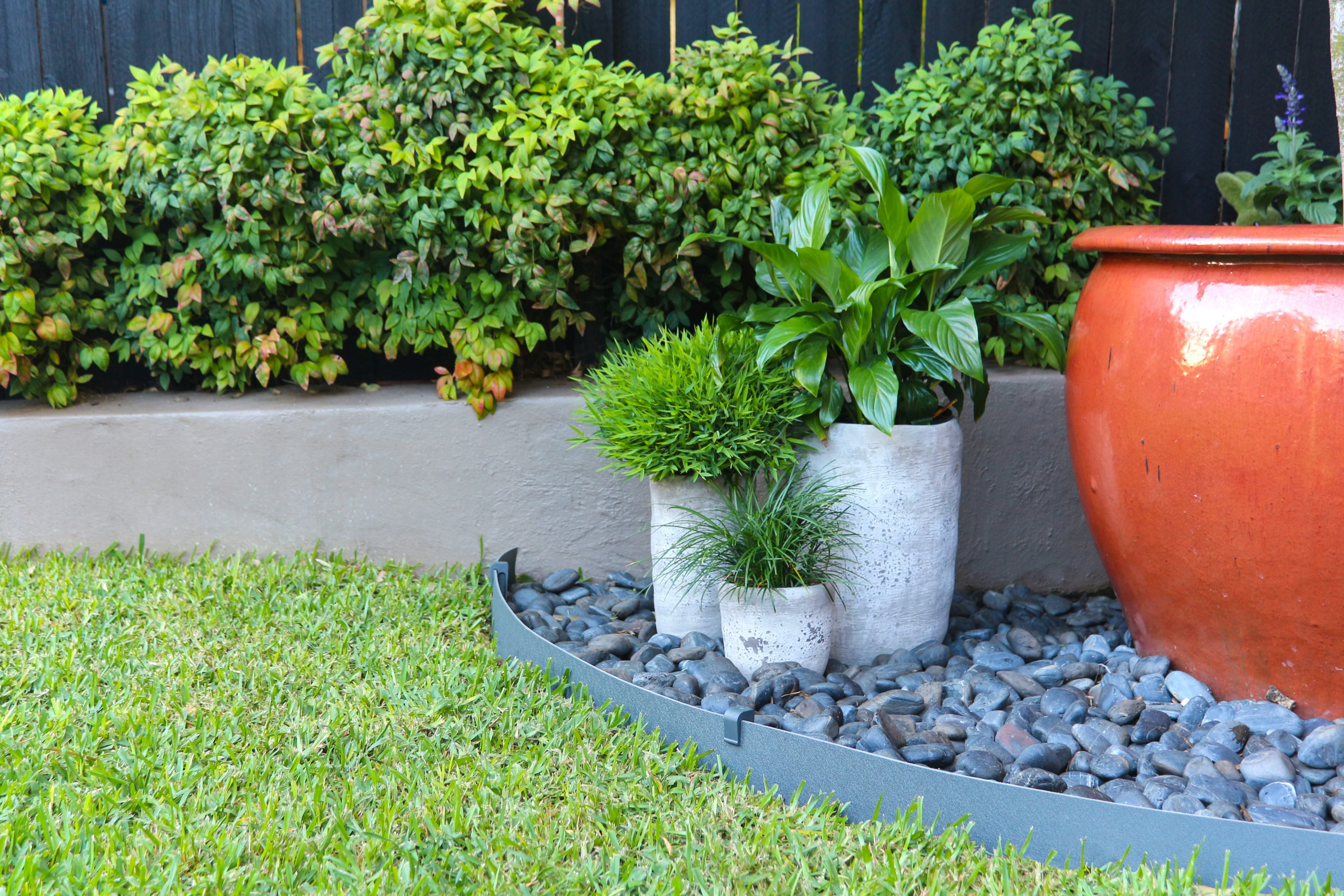
A thin, powder-coated line that almost disappears once mulch is in. It bends around curves and gives the crispest division between lawn and bed.
Give lawns and planted beds a clear boundary, contain mulch and create a practical mowing edge. We install one border or edging throughout a garden.
Overview
An edge may separate lawn from mulch, contain gravel or finish a path beside planting. Those jobs need different profiles and fixing details, so the surfaces on either side are considered before a material is selected.
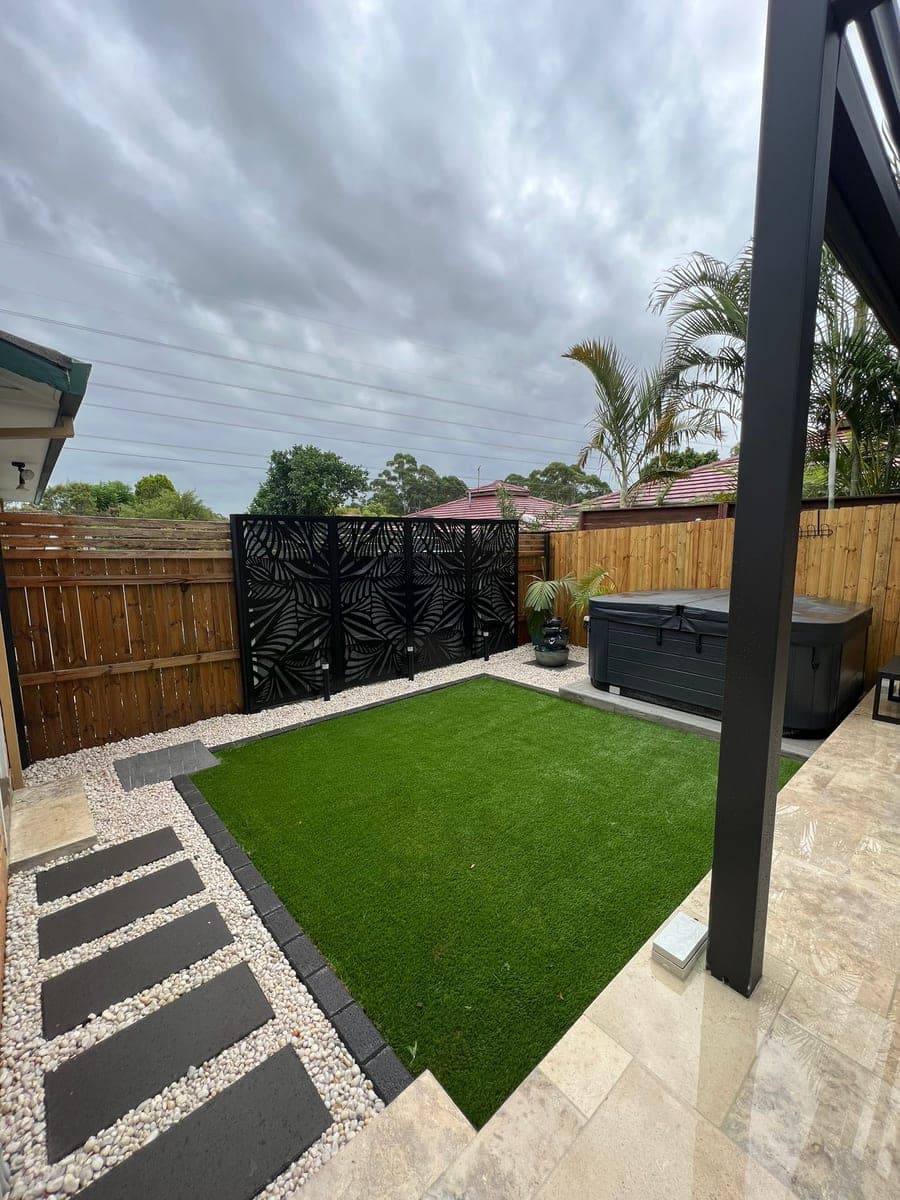
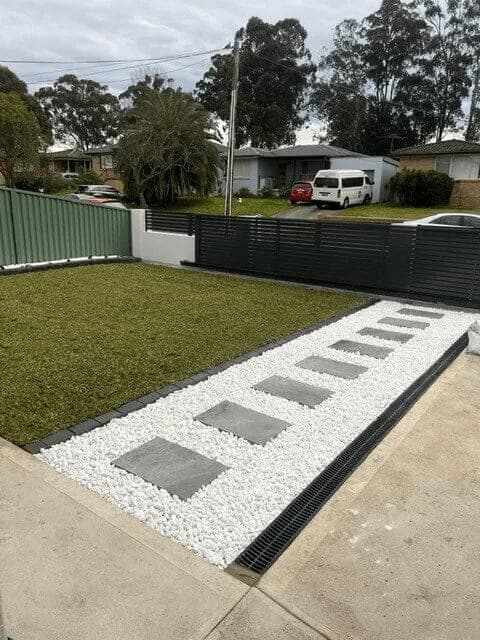
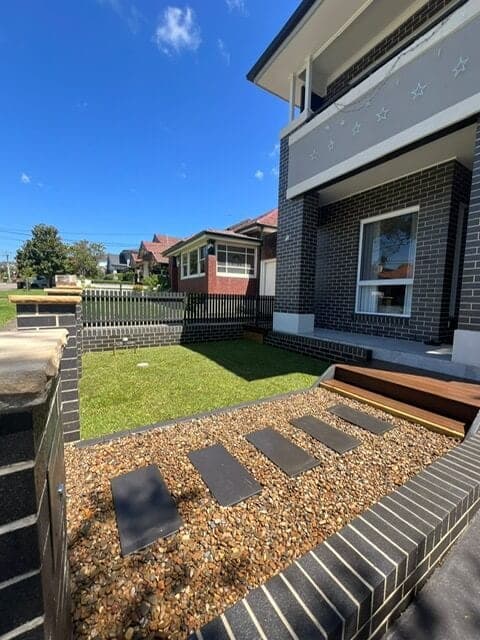
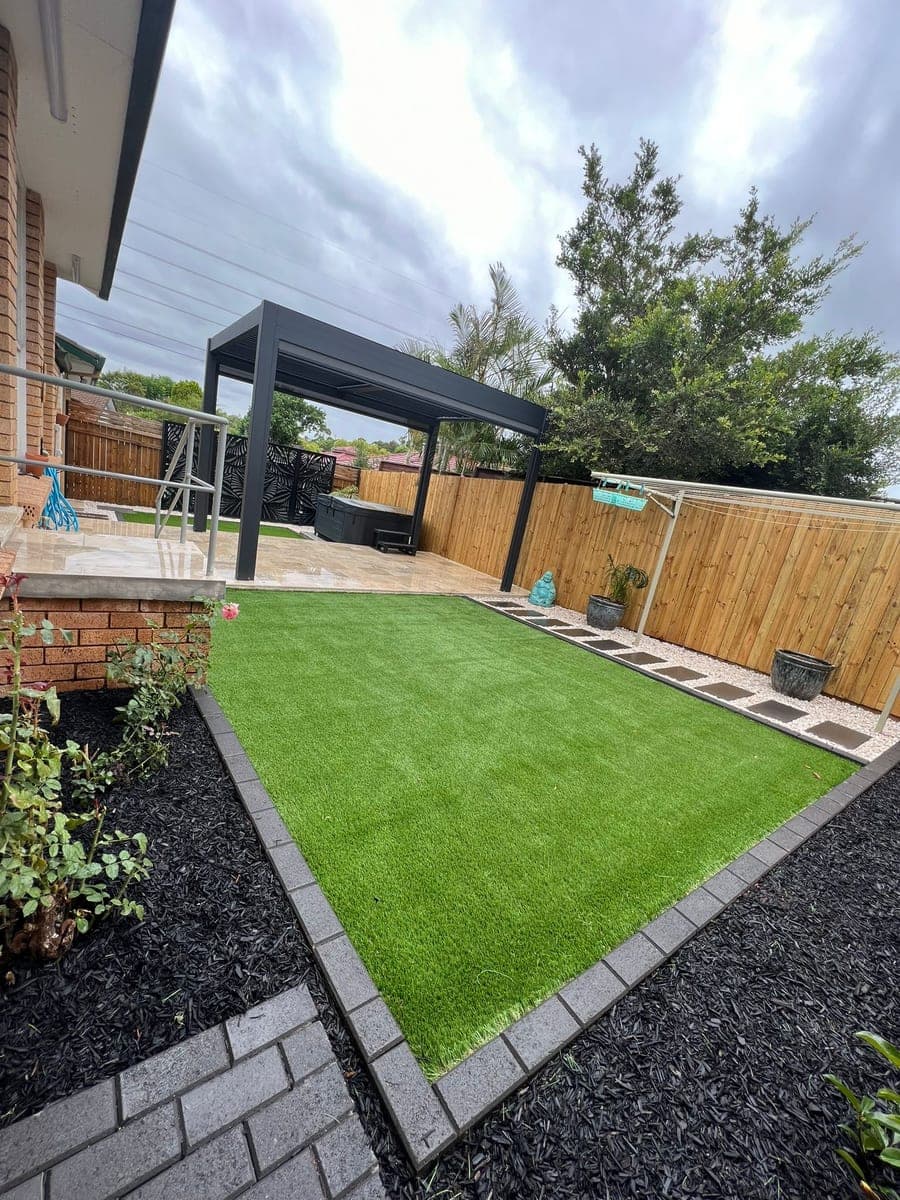
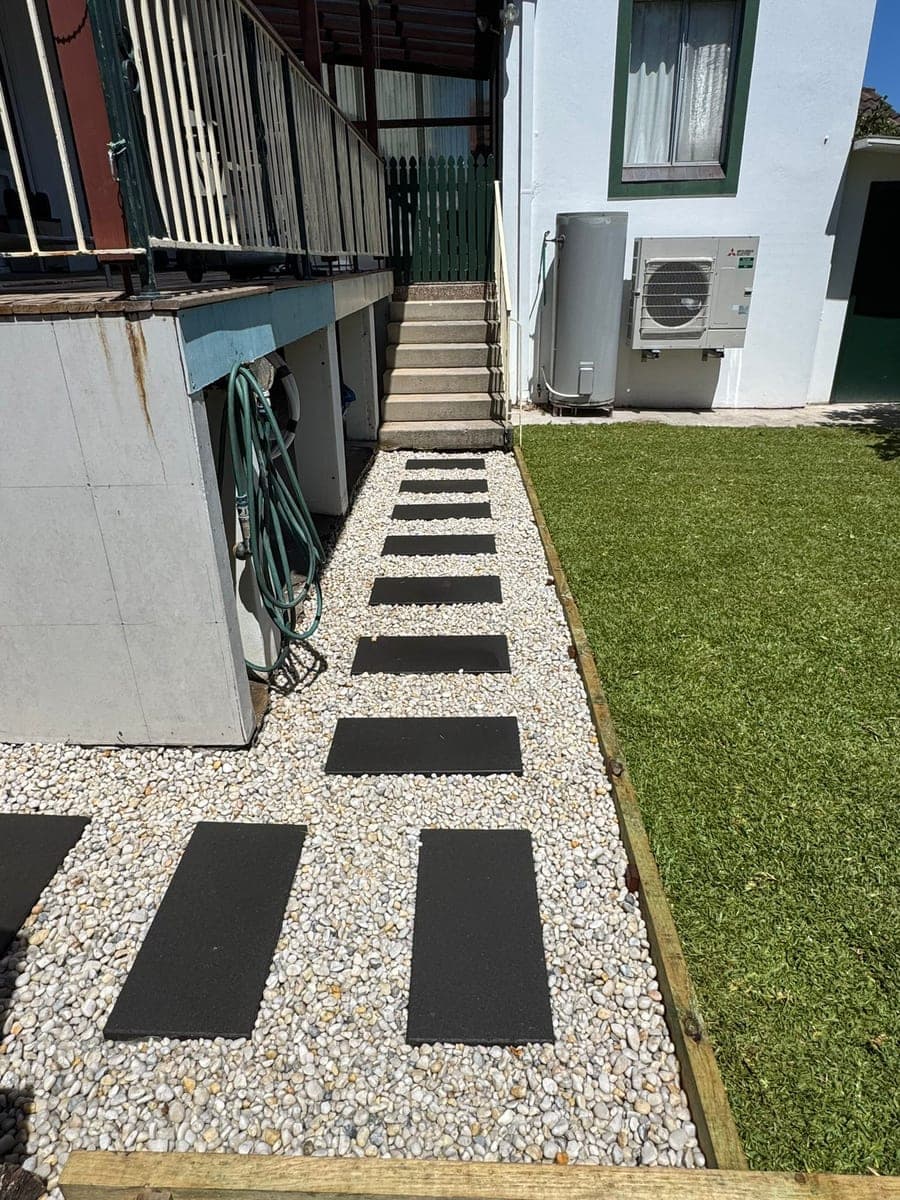
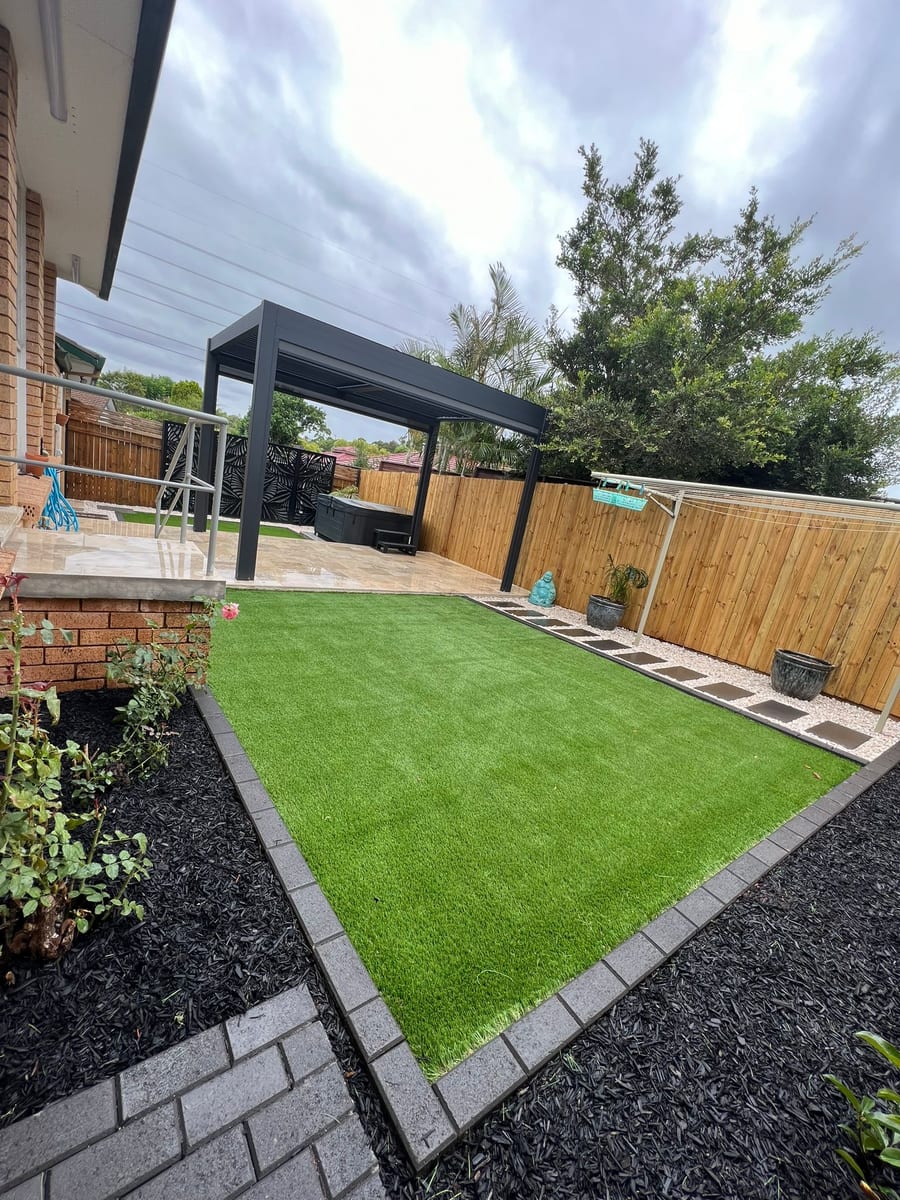
Our Balmain project shows a defined artificial-lawn boundary beside pebbles and stepping stones. For natural lawns, mowing access and spreading grass also matter. Steel, timber, stone and concrete offer different appearances, depths and maintenance needs.
What the work covers
A thin, powder-coated line that almost disappears once mulch is in. It bends around curves and gives the crispest division between lawn and bed.
Rusts to a stable finish and reads warmer than black steel. It suits native and gravel gardens, and will mark adjoining light-coloured paving as it weathers.
Aluminium can form a slim, curved border. The alloy, finish, fixings and exposure affect its suitability; check the product specification for coastal or other corrosive conditions.
Sleepers or smaller sections for a visible, softer border. It suits cottage and informal planting, and it is the option that reads most obviously as an edge.
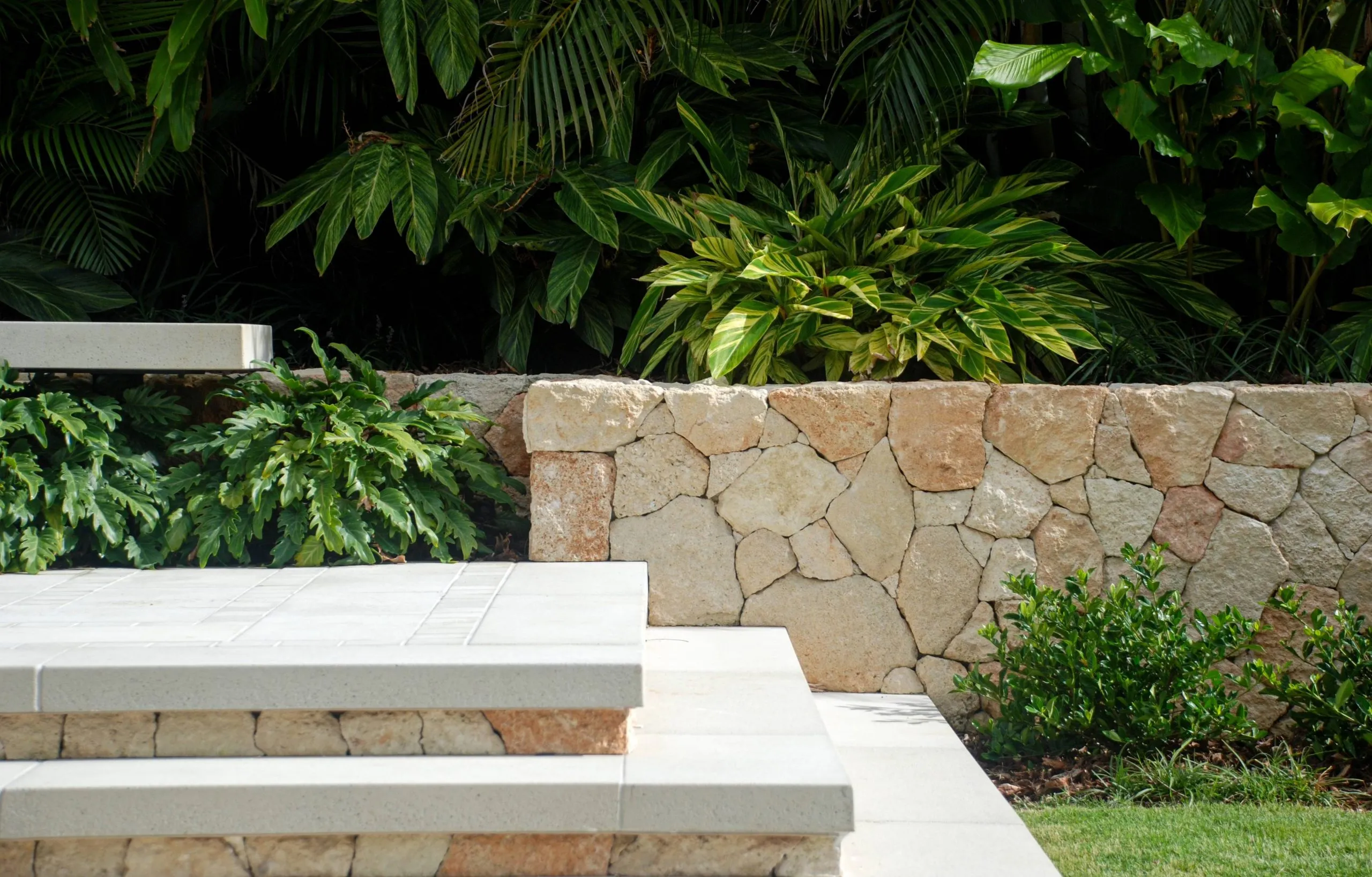
Sandstone, bluestone or a poured strip. Substantial and fixed in place, and the usual choice where the edge is also holding a small level change.
A flat paver or concrete strip the mower wheel can run along, which can reduce trimming along the edge. Allow enough width for the mower and keep the surface clear.
Completed work
How it works
Holding mulch, stopping runners, taking a small level change or giving the mower a line all point to different profiles and depths.
The line is set out on the ground for you to look at from the house and the garden before anything is trenched, because it is hard to unsee once installed.
The trench is cut to the depth the job needs, then the edge is staked, pinned or haunched depending on the material so it stays where it was put.
Beds are re-mulched and turf is repaired against the new line, so the edge is the only thing you end up noticing.
Customer reviews
Common questions
Edging can help separate lawn from planting, but grass may still grow over or under it. Kikuyu, couch and buffalo spread by runners in different ways. Choose the depth and profile for the lawn and inspect the border as part of normal garden care.
Steel where you want the edge to disappear, timber where you want to see it, stone or concrete where the edge is also holding a level change. Curves, exposure and what sits on either side narrow it quickly.
Steel and aluminium bend into smooth curves easily. Timber has to be broken into shorter sections, and stone into shorter pieces, so a tight curve reads more faceted in those materials.
Enough to do its job. A definition line can sit shallow. Holding back runners takes a deeper profile, and a mowing strip has to finish flush with the lawn. We set the depth against the grass and the beds involved.
Yes. We work around existing plants, lift and replace turf where the line crosses lawn, and make the beds good afterwards.
Agree the lawn and bed levels before installing the edge. The border can then be set to suit mowing, hold the intended materials and meet adjoining paths, before the new turf and planting are finished.
Planning guides
Where we work
Tell us what is on either side of the line and how the beds are used. We will work out which edge suits it.