Table of Contents
A garden border may separate lawn from planting, hold mulch or give a path a finished edge. Choose the profile and material for that role before deciding how visible you want it to be.
Identify what is on each side
Lawn beside mulch needs different consideration from gravel beside paving. The finished levels affect the depth, fixings and appearance of the border. A significant retained level calls for assessment as retaining work, rather than being treated as ordinary edging.
For natural grass, allow for growth across or beneath the edge. Kikuyu, couch and buffalo spread by runners in different ways; edging helps manage the boundary but does not prevent every runner or weed.
Compare edging materials
| Material | Useful characteristics | Details to check |
|---|---|---|
| Steel | A slim line, including suitable curved profiles | Coating or weathering behaviour, fixings and staining nearby surfaces |
| Aluminium | Lightweight profiles that can suit curves | Product specification, finish and exposure |
| Timber | A visible border that can relate to other timber work | Treatment, ground contact, fixing and eventual renewal |
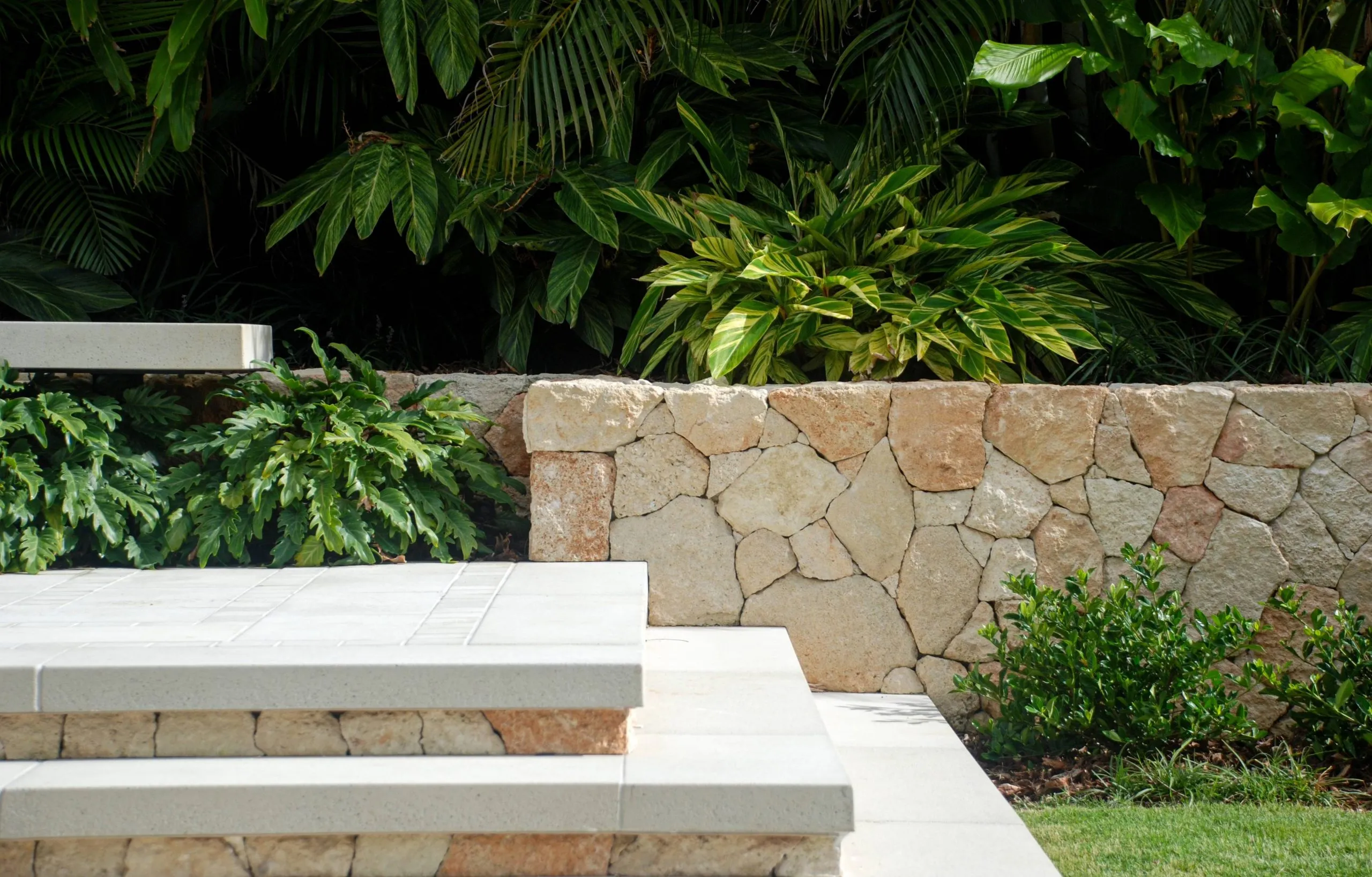
| Stone or concrete | A more substantial edge or mowing strip | Foundations, joints, width and finished level |
No material is suitable for every exposure. Check the particular product, especially where coastal conditions or contact with other materials may affect durability.
Plan mowing and garden care
A mowing strip can give a mower wheel a usable surface beside a bed. It needs an appropriate width and level, and may reduce trimming without eliminating all edge care.
Curved borders should leave a practical lawn shape and enough room to reach planting. A tight decorative curve may be awkward to mow or keep clear.
Real boundaries in completed work
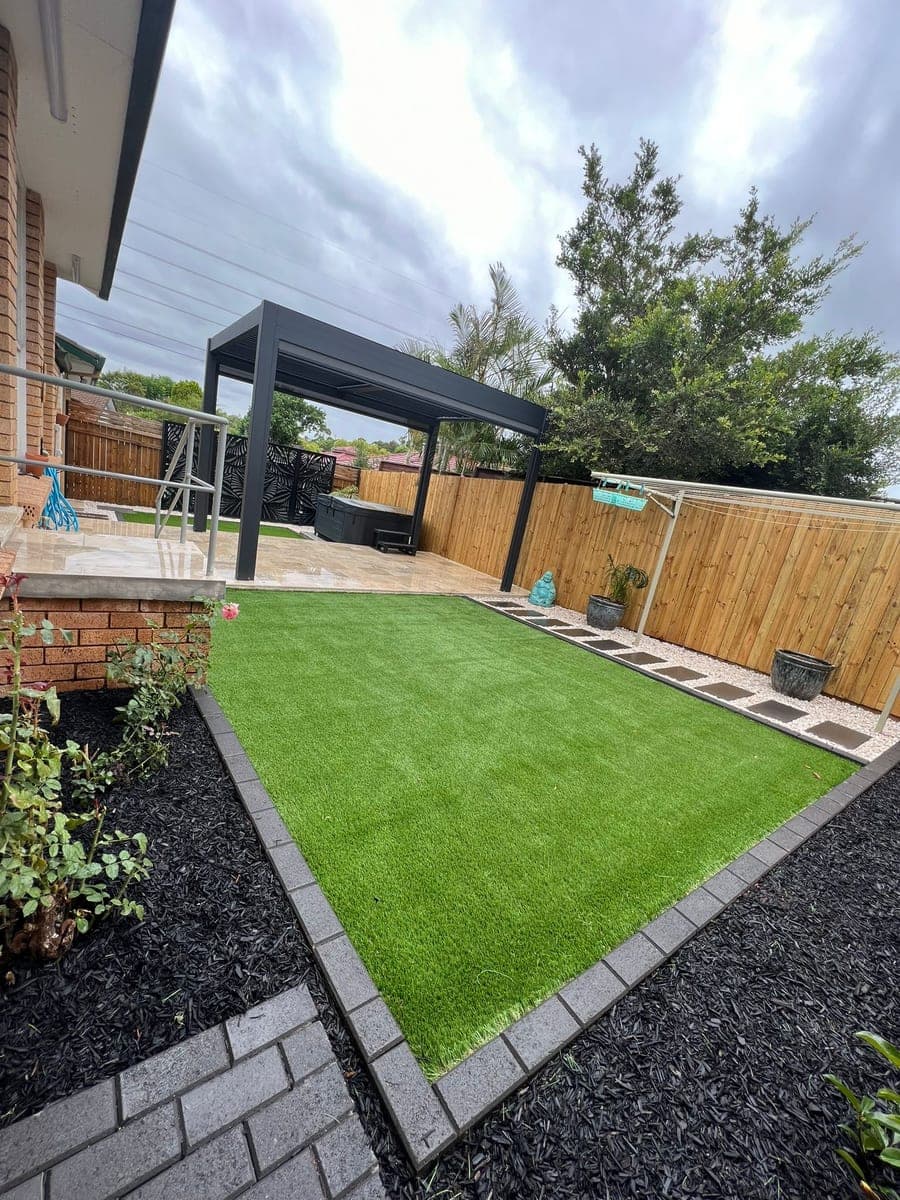
The Balmain backyard has a defined artificial-lawn boundary beside pebbles and stepping stones. The Canterbury front garden combines lawn, a path and edging in a different layout.
These photographs show the finished relationship between surfaces. Depth and fixings beneath an edge still need to suit the work at your property.
Garden edging should suit the lawn, bed materials and finished surface levels. Plan it with any adjoining lawn, path or planting changes so the finished levels agree.