Table of Contents
A garden path should connect the places people need to reach. The route to a gate, clothesline, tap or seat is a better starting point than a decorative pattern alone.
Choose the route for its users
Look at how the garden is used through the day. Check gates and doors, the items carried along the route and whether a bin, pram or mobility aid needs to pass.
Stepping stones can suit walking through lawn or planting. Gaps and loose material can make wheeled access awkward, so a continuous paved or concrete path may be more useful for those routes.
Set out stone size and spacing together
A large stone and a small stone produce different comfortable gaps. Place the proposed stones and test the route before fixing them, including turns and the approach to a gate or step.
The finished surfaces need stable support and suitable levels. Ground conditions, traffic and the selected stone influence the bedding. In lawn, the mowing arrangement also matters.
Choose what sits between the stones
| Infill | Considerations |
|---|---|
| Lawn | Sunlight, mowing access and growth around the stone edges |
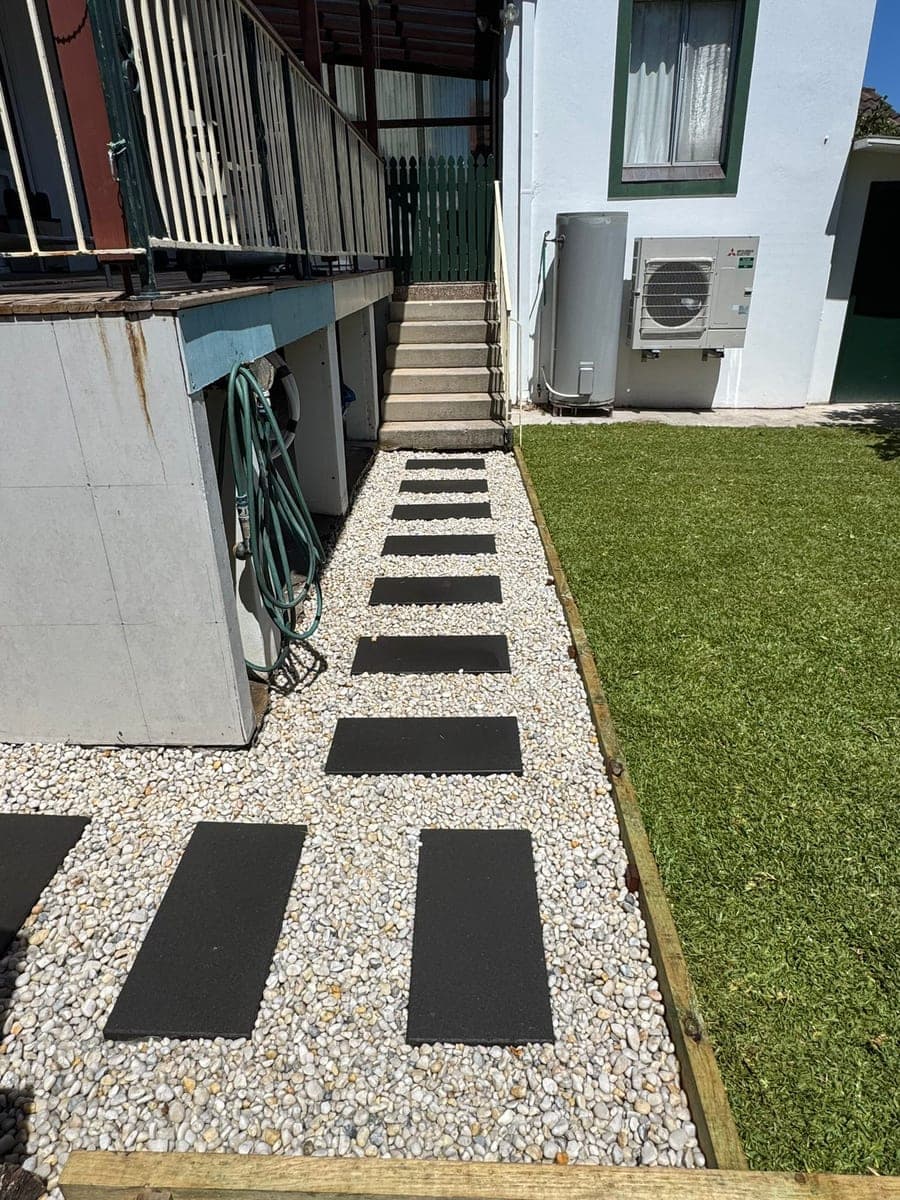
| Gravel or pebbles | Edge restraint, movement of loose material and cleaning |
| Groundcover | Light, foot traffic, growth habit and trimming |
None of these removes all maintenance. Leaves, soil and weeds can collect around the path, while surface growth can affect grip in damp positions.
Compare two real routes
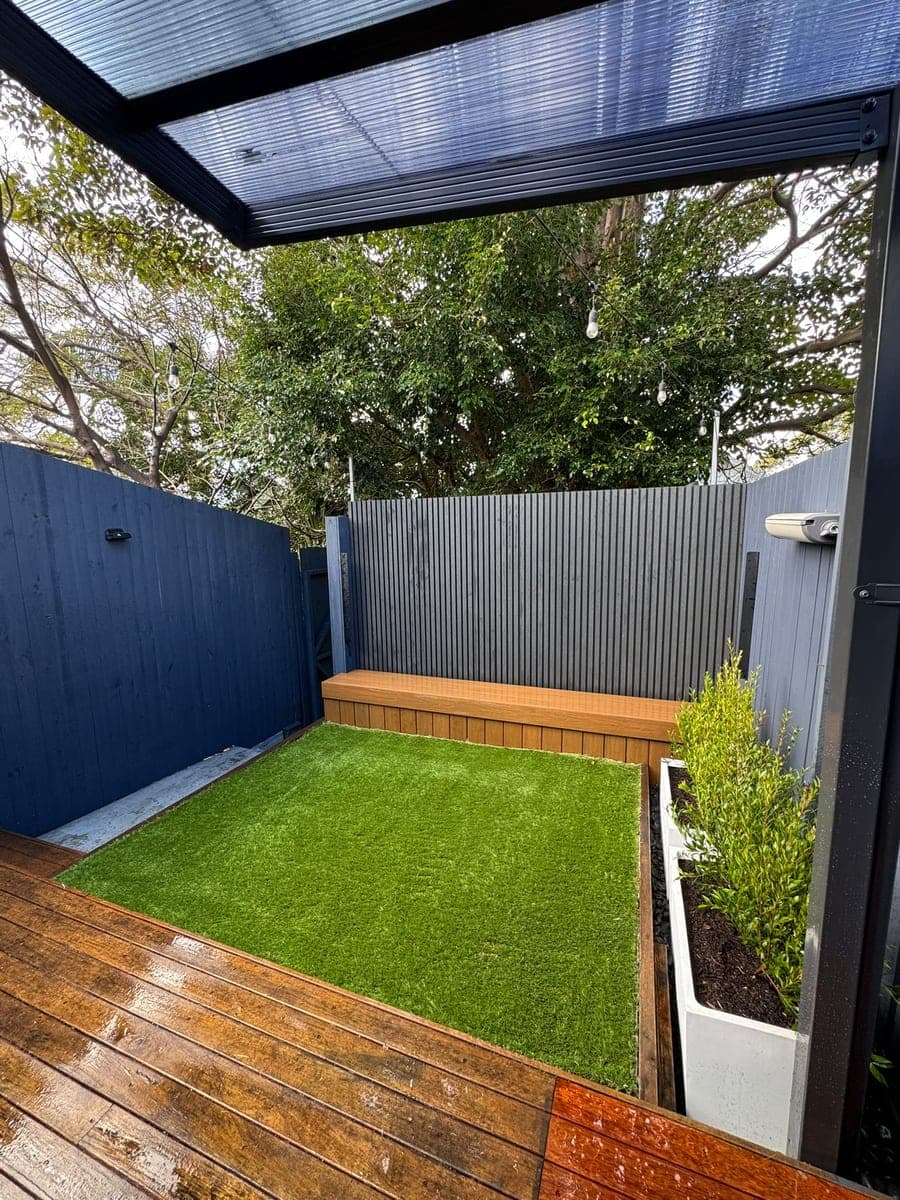
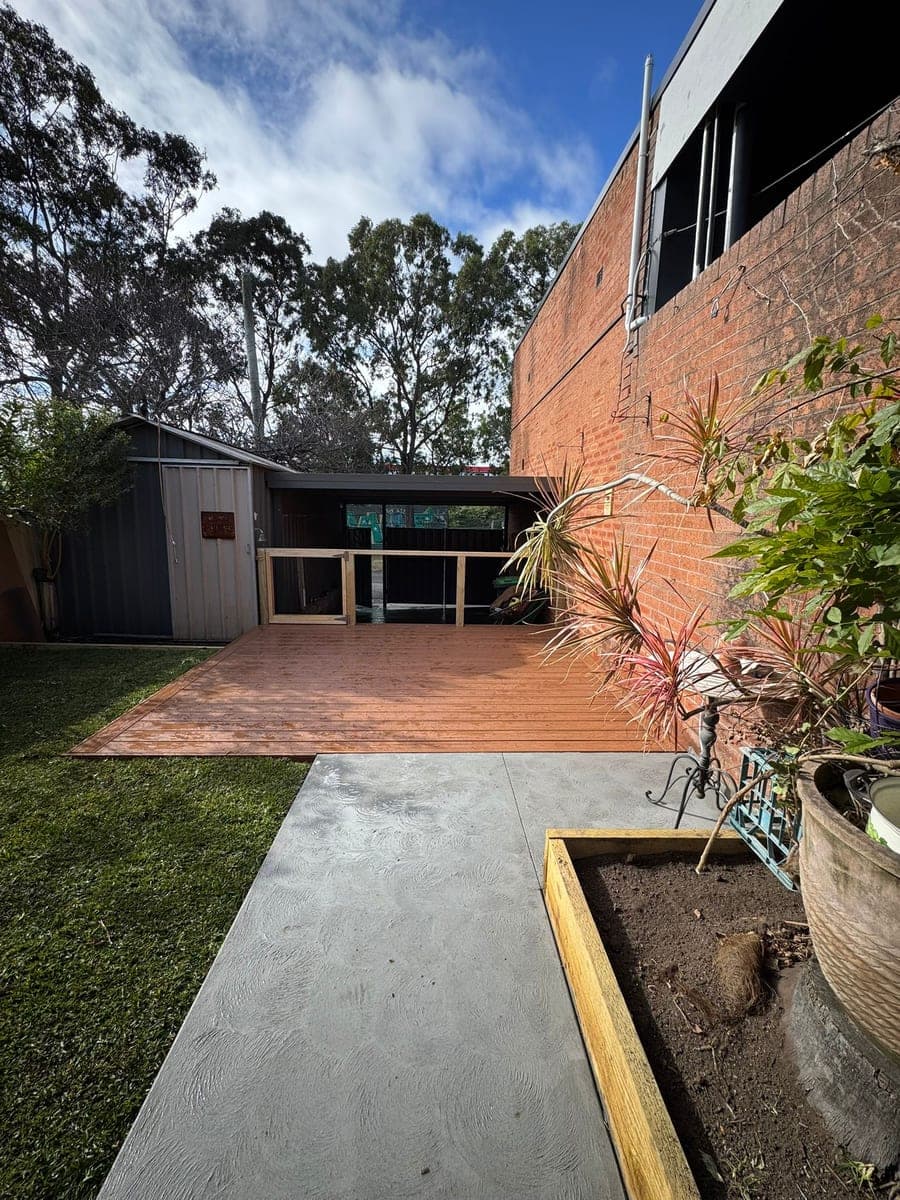
The North Ryde stepping-stone project created a defined side-access route. In the Dulwich Hill backyard refresh, lawn and a stepping-stone path replaced concrete.
Both show a route connected to its surroundings. Your own path may require different widths or a continuous surface because the users and destinations differ.
Finish the connections
A path should arrive comfortably at doors, gates and steps. Plan its drainage and the boundary with lawn or beds, keeping adequate room for mature plants. Garden paths and stepping stones can be installed as a focused improvement or alongside a wider garden build.