Buffalo varieties
Broad-leaf buffalo is an option for family lawns and some partially shaded sites. Shade tolerance varies by cultivar; the available light still needs to meet the selected product’s requirements.
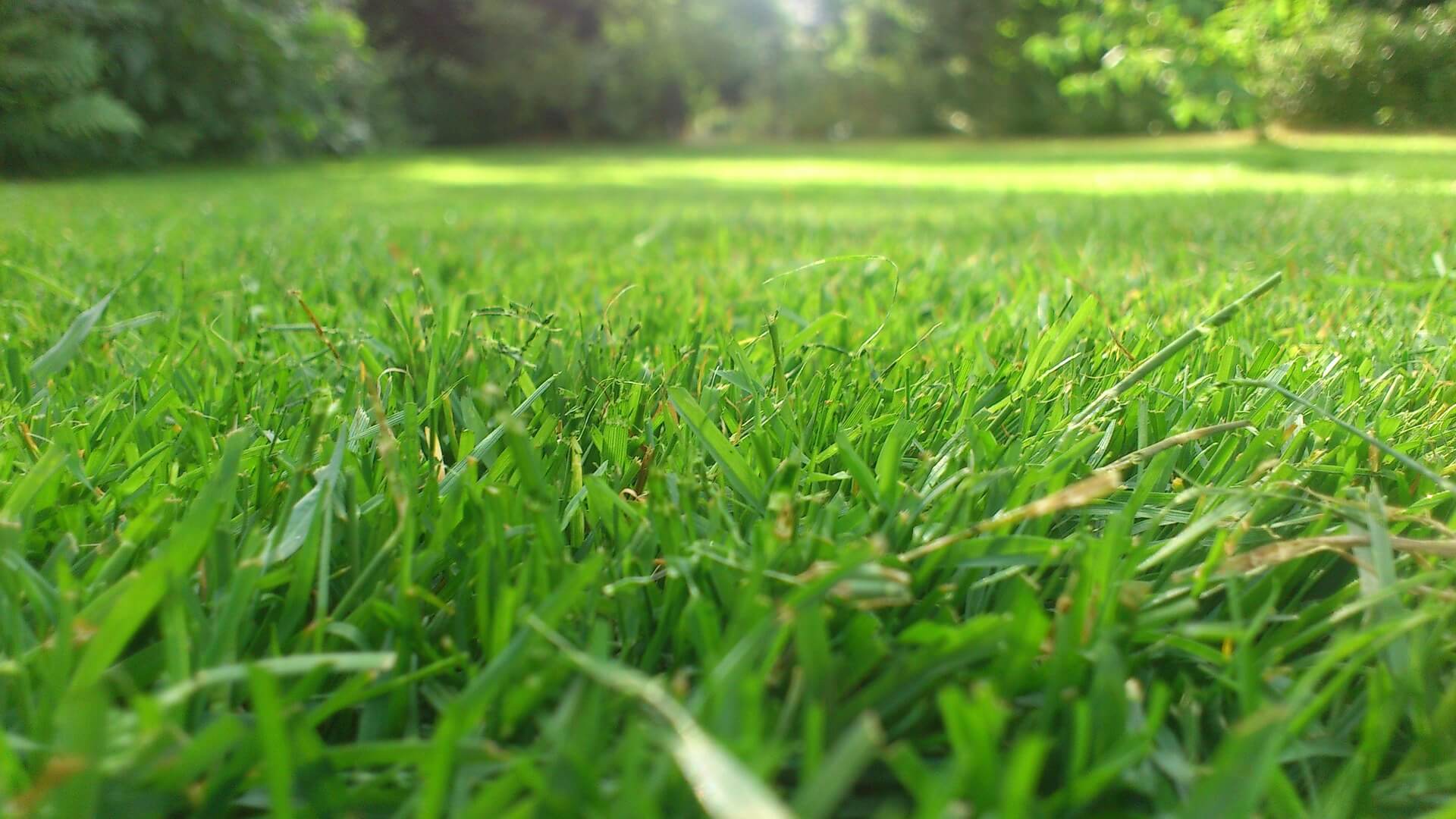
Fresh natural turf for a new garden or a lawn that needs renewing. We prepare the ground, lay the turf and explain the early care, with the variety chosen for your sunlight and use.
Overview
Natural lawn gives you a living surface for everyday garden use. Buffalo, kikuyu and couch options differ in their light needs, texture, wear tolerance and maintenance. We assess the available sun and ground conditions before recommending a variety.
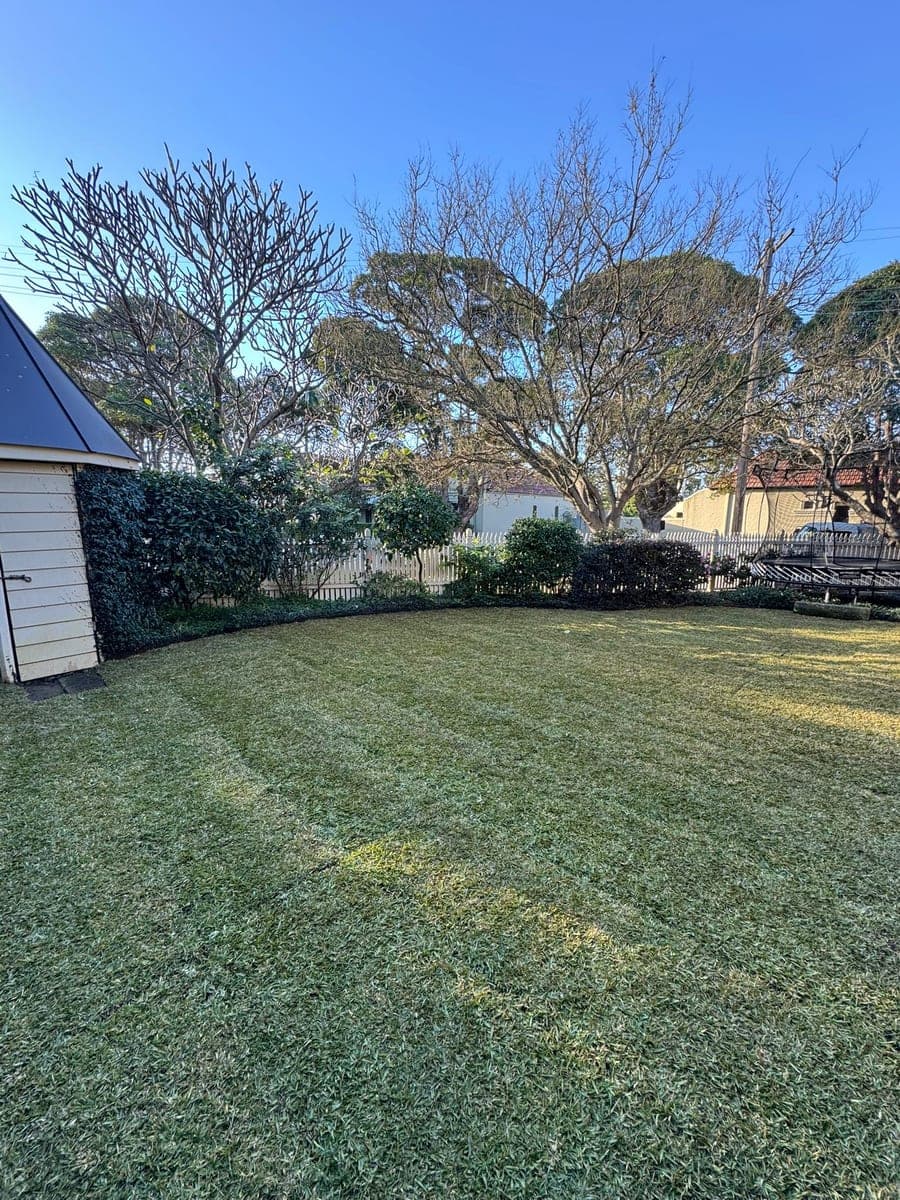
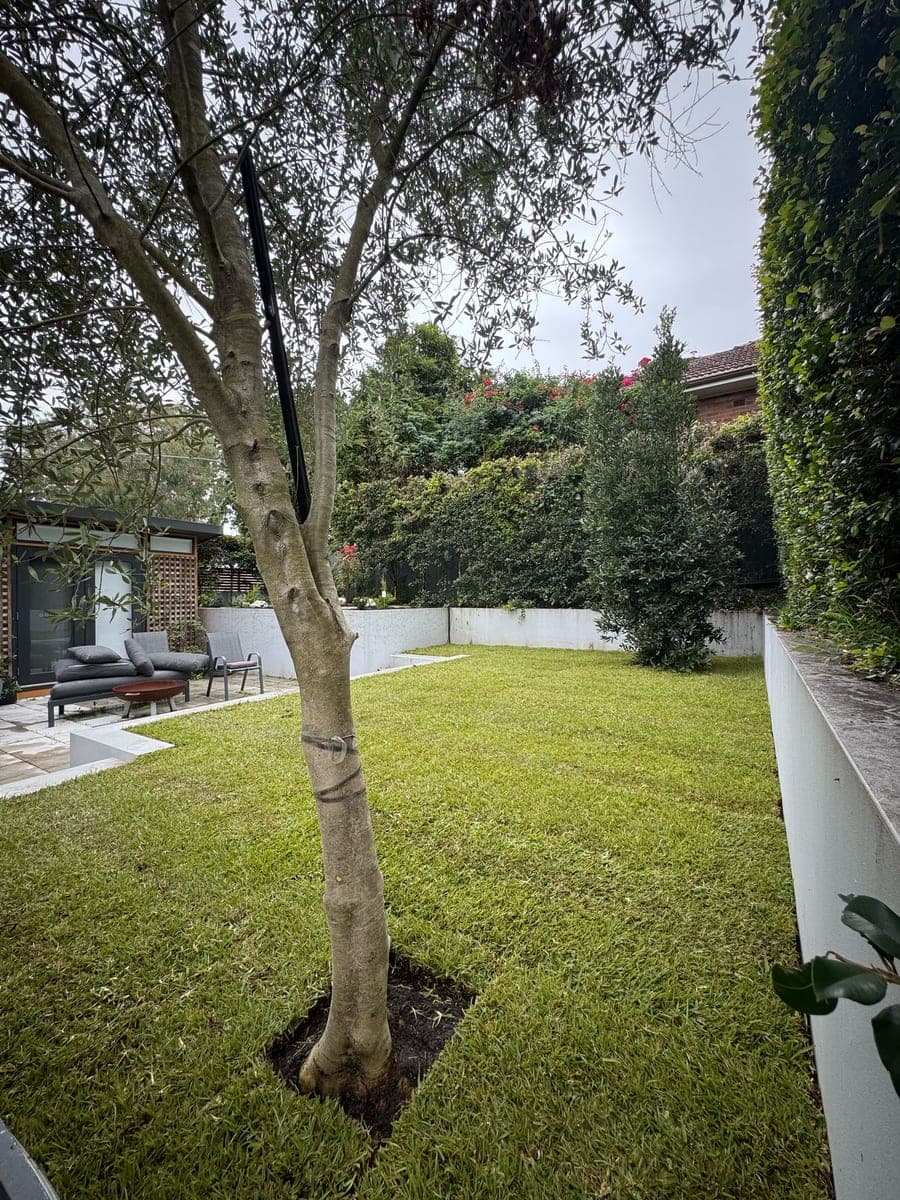
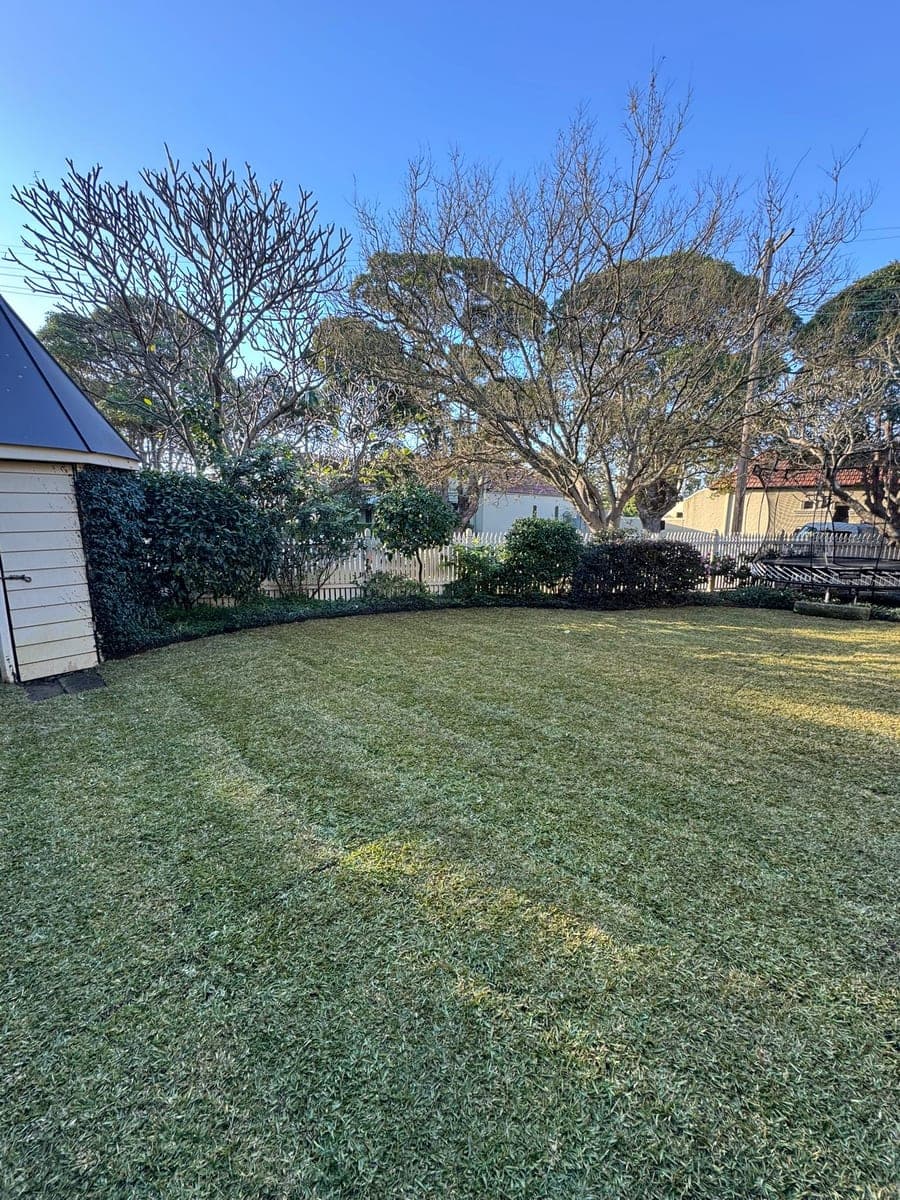
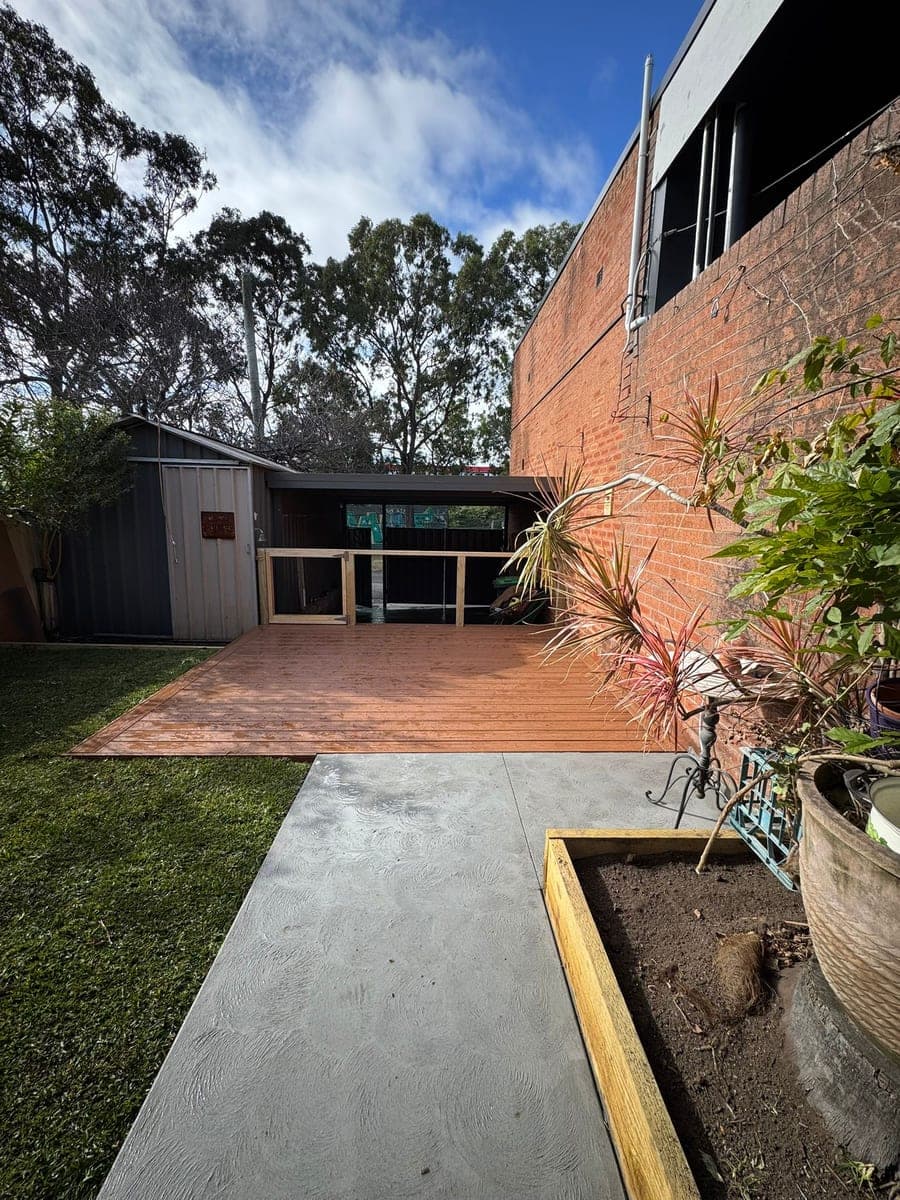
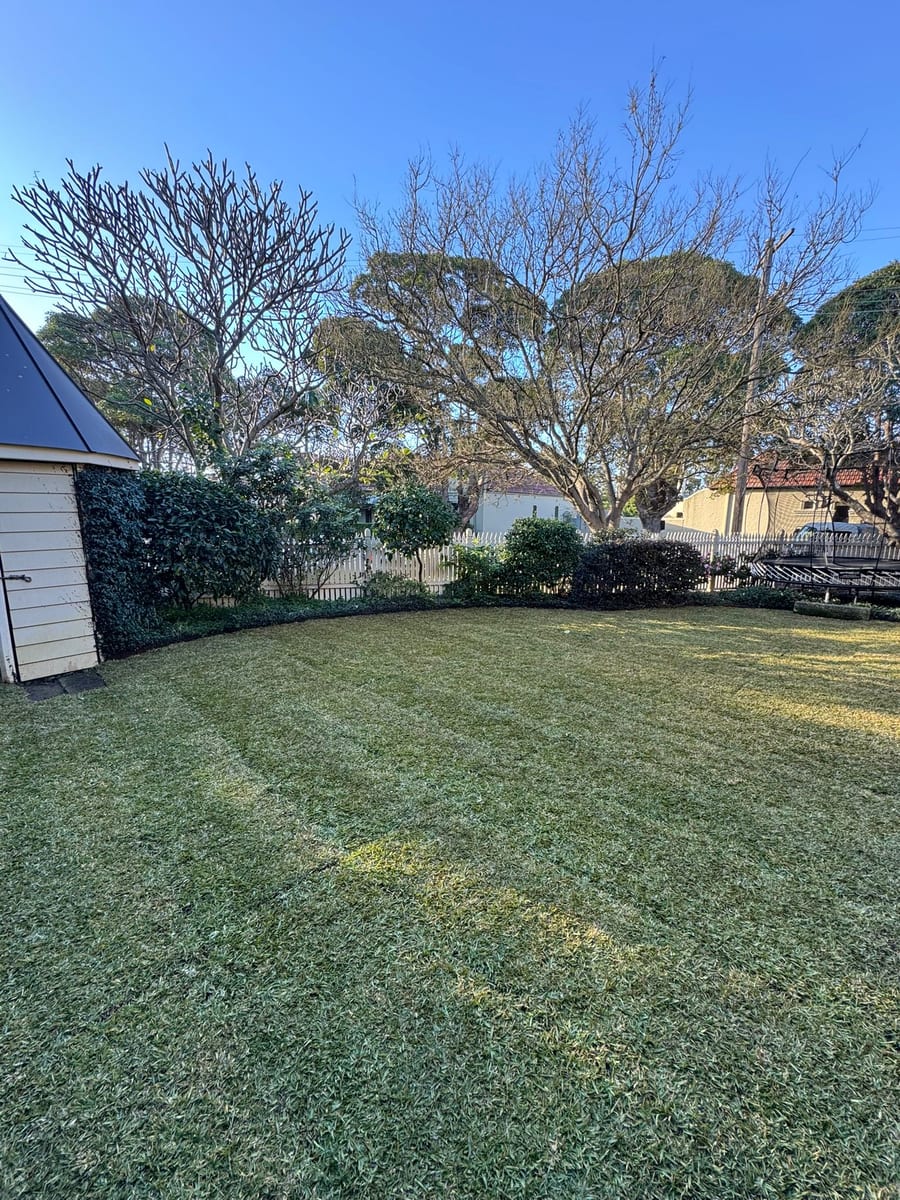
In Glebe, we removed the failed lawn, improved the ground and laid Sir Walter buffalo through the established garden. A lawn renewal may involve removing existing grass, improving soil and correcting levels or drainage before the new turf is laid.
What the work covers
Broad-leaf buffalo is an option for family lawns and some partially shaded sites. Shade tolerance varies by cultivar; the available light still needs to meet the selected product’s requirements.
A vigorous option for sunny, frequently used lawns. Its runners need regular edging and management where the lawn meets planting beds.
Fine-leaf options for a closely maintained lawn where there is enough sunlight. Light requirements and mowing heights should be checked for the particular cultivar.
Old lawn removed, the ground broken up, soil improved and graded, and falls set. This gives new roots suitable ground to establish in.
Where a lawn has gone patchy or bare, the cause is diagnosed first. Compaction, shade or drainage will do the same thing to new turf if they are left alone.
After building work, check for compaction, debris and adequate soil depth. Preparation depends on what is found; suitable existing soil does not automatically need replacing.
Completed work
How it works
How many hours of direct sun the area gets, how hard it will be used and how the soil drains. Those three answers narrow the variety very quickly.
Existing lawn, weeds and debris are removed, the ground is broken up and improved, then graded and levelled with falls away from the house.
Turf goes down fresh, in staggered courses with tight joints, cut in around the edges and rolled or firmed onto the prepared ground.
The lawn is watered in and given establishment care suited to the variety, season and soil. Keep traffic light until roots anchor the turf, and follow the supplier’s advice for watering and the first mow.
Customer reviews
Common questions
Start with how much direct sun the area gets through the middle of the day. Full sun opens up couch and kikuyu. Where a fence, a wall or a tree takes part of that light, a buffalo is usually the safer call. Wear and drainage then narrow it further.
The milder parts of the year are easiest, because the lawn is not fighting heat while it roots in. Summer laying works if you can commit to the watering, and winter laying establishes more slowly.
New turf needs consistent moisture while roots establish. Frequency varies with heat, rain, soil and the variety. Follow the supplier’s establishment instructions, check moisture beneath the turf and observe the current Sydney Water rules.
Yes. Turf laid straight onto compacted ground or old lawn struggles to root into it, and watering does not make up the difference. Stripping out and improving the soil is usually what separates a lawn that takes from one that thins out.
Keep off it while it is knitting in, then start with light foot traffic before working up to normal use. How long that takes depends on the season and how well it is being watered, so the signs to look for matter more than a fixed date.
Planning guides
Where we work
Tell us how much sun the area gets and how it will be used. We will work out what suits it.