Table of Contents
Natural and artificial turf can both give a garden an open green area, but they suit different conditions and ask for different care. Start with the sunlight, use and drainage at your property before comparing colour or texture.
Compare the garden conditions
| Consideration | Natural turf | Artificial turf |
|---|---|---|
| Sunlight | Needs enough light for the chosen variety to grow and recover | Does not need sunlight to grow, but surface heat matters in direct sun |
| Everyday use | Wear and recovery depend on the variety, light and care | Product and installation must suit the expected traffic |
| Drainage | Needs suitable soil and drainage beneath the roots | Needs a suitable base and a way for water to leave |
| Routine care | Mowing, watering, edging and appropriate feeding | Debris removal, cleaning and brushing as required by the product |
| Pets | Wear can concentrate in favourite routes and resting spots | Cleaning, drainage and product suitability need particular attention |
| Future renewal | Can sometimes be repaired or renovated in sections | Worn or damaged areas may need repair or replacement, with joins considered |
Neither surface should be chosen to hide a drainage problem. Ground preparation differs between the two systems and must suit the site.
Two genuine installations
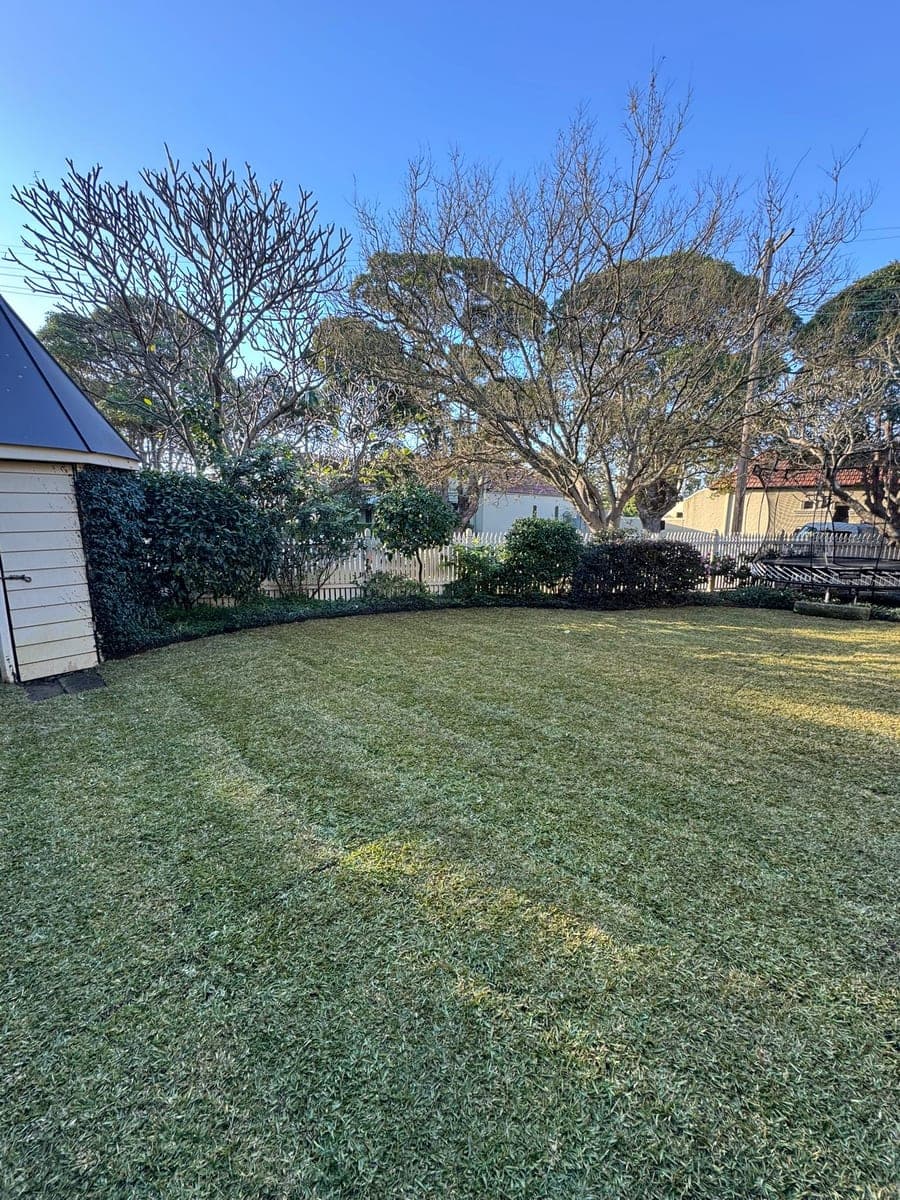
In Glebe, Outdoor Blitz removed the failed lawn, improved the ground and laid Sir Walter buffalo through an established garden. Natural turf was the selected surface for that renewal.
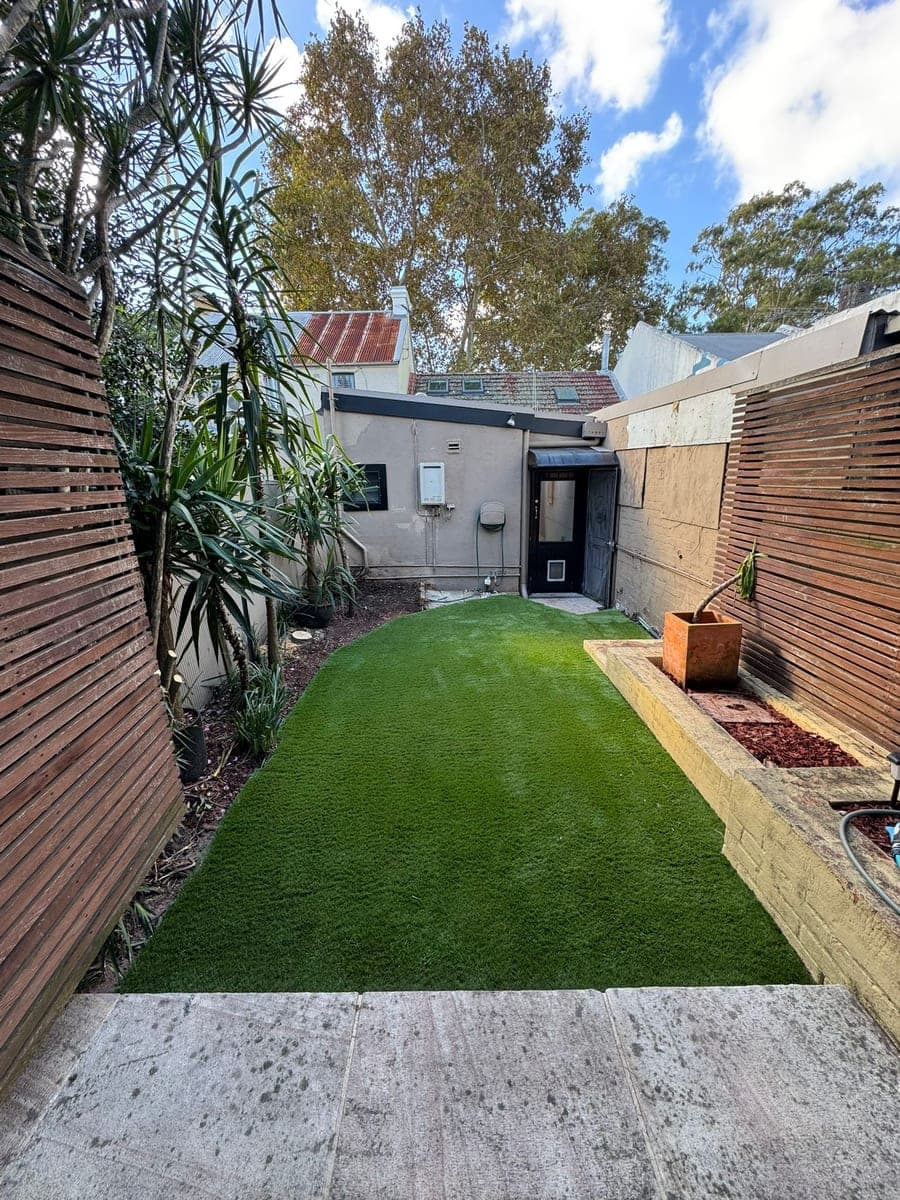
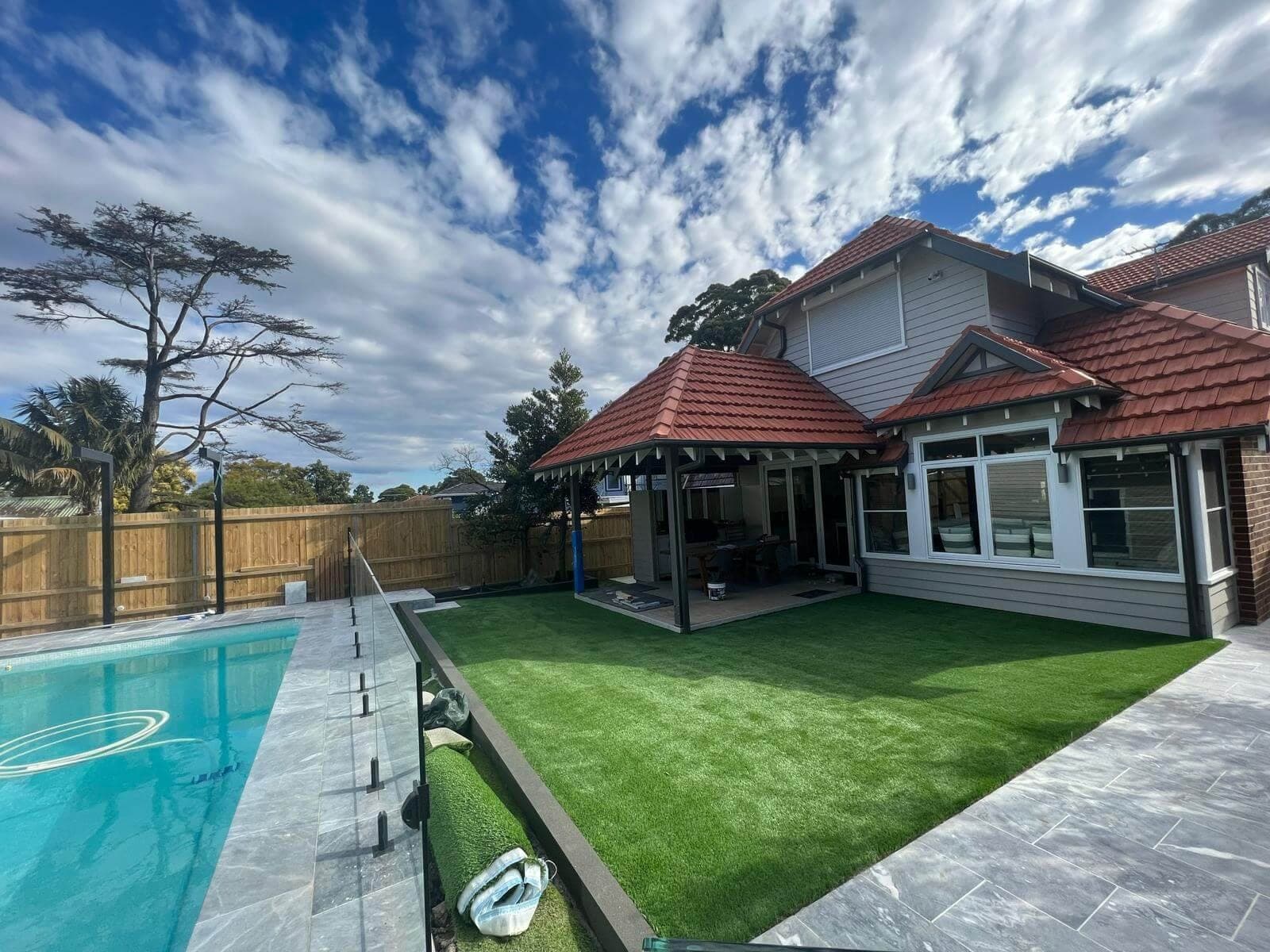
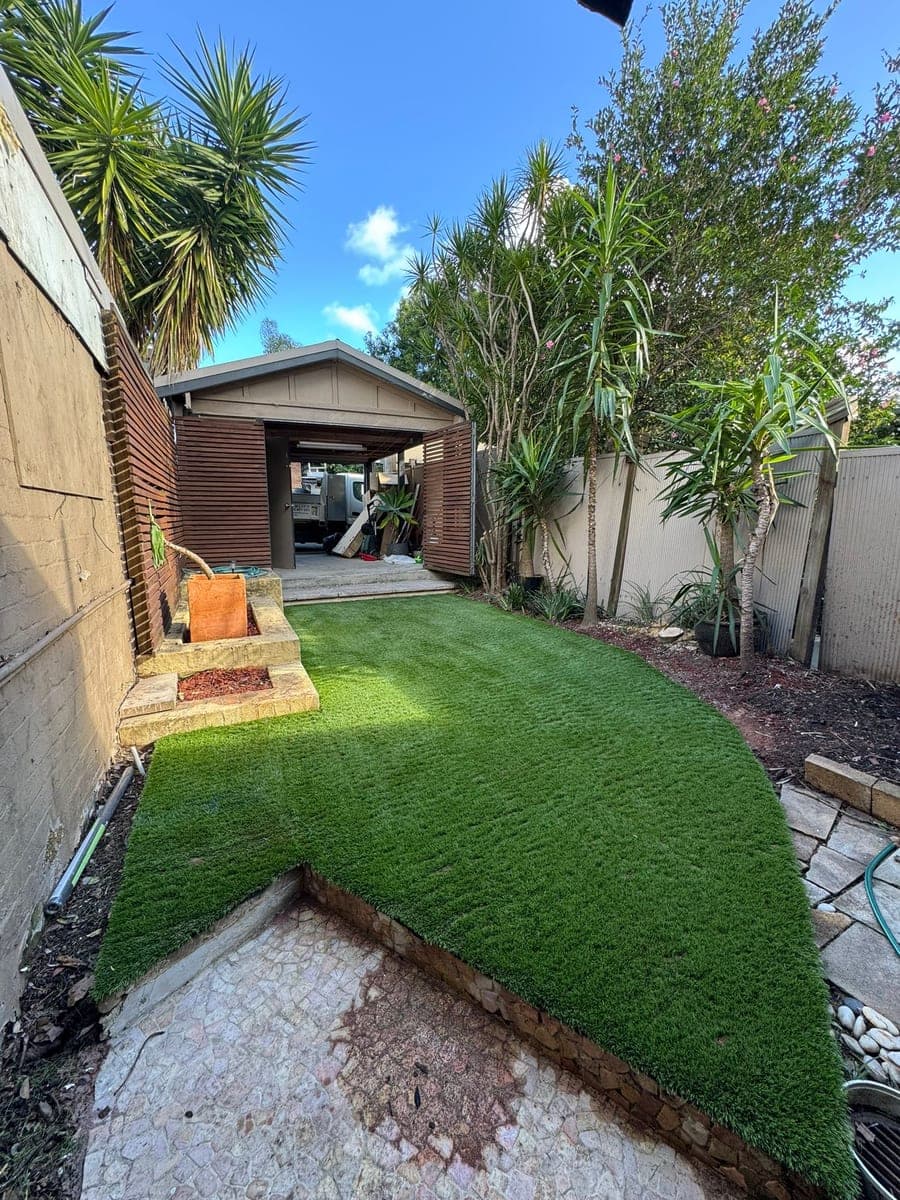
In Camperdown, a struggling courtyard lawn was replaced with artificial turf fitted around the available space. This illustrates a different choice, rather than proof that synthetic lawn suits every courtyard.
Check light and wear together
Observe where direct sunlight reaches the proposed lawn and how neighbouring buildings or trees change it through the year. Varieties differ in their light requirements; even a shade-tolerant grass still needs suitable conditions. Heavy use can make recovery more difficult where light is limited.
A route to the bins or clothesline may be better handled by a path alongside the lawn. That can preserve a natural grass area without asking it to carry every trip through the garden.
Be clear about upkeep and heat
A living lawn needs establishment care and continuing maintenance. Choose a variety with a texture and care requirement you are comfortable with, and allow for watering under the current local rules.
Artificial turf needs leaves and debris removed, with pet areas cleaned and the pile cared for according to the product instructions. It can become hot in sunlight. Shade and the times the area is used are worth considering, particularly where people will be barefoot.
Compare the complete installed scope
A useful price comparison includes removal, ground preparation, drainage, edges and the selected surface. Ongoing care and eventual renewal also matter. There is no reliable payback period that applies to every garden, and a product price alone does not describe the installed job.
You can also combine surfaces. A natural lawn, planted border and clear path may suit one layout; artificial turf may fit another area. Explore natural turf installation and artificial turf installation against the way your garden will be used.