Table of Contents
A small garden needs useful dimensions more than a long list of features. Start with the places to sit and move, then give planting enough space to grow without taking over the route through the yard.
Set out the furniture and routes
Use the actual table, chairs or seat dimensions. Allow for chairs to pull out, doors and gates to open, and people to reach the clothesline, bins or storage. A central route can sometimes serve several of those needs.
There is no universal ratio of paving to planting, or a fixed number of uses a courtyard can support. The arrangement depends on the shape of the space and how the household uses it.
Build seating into an edge
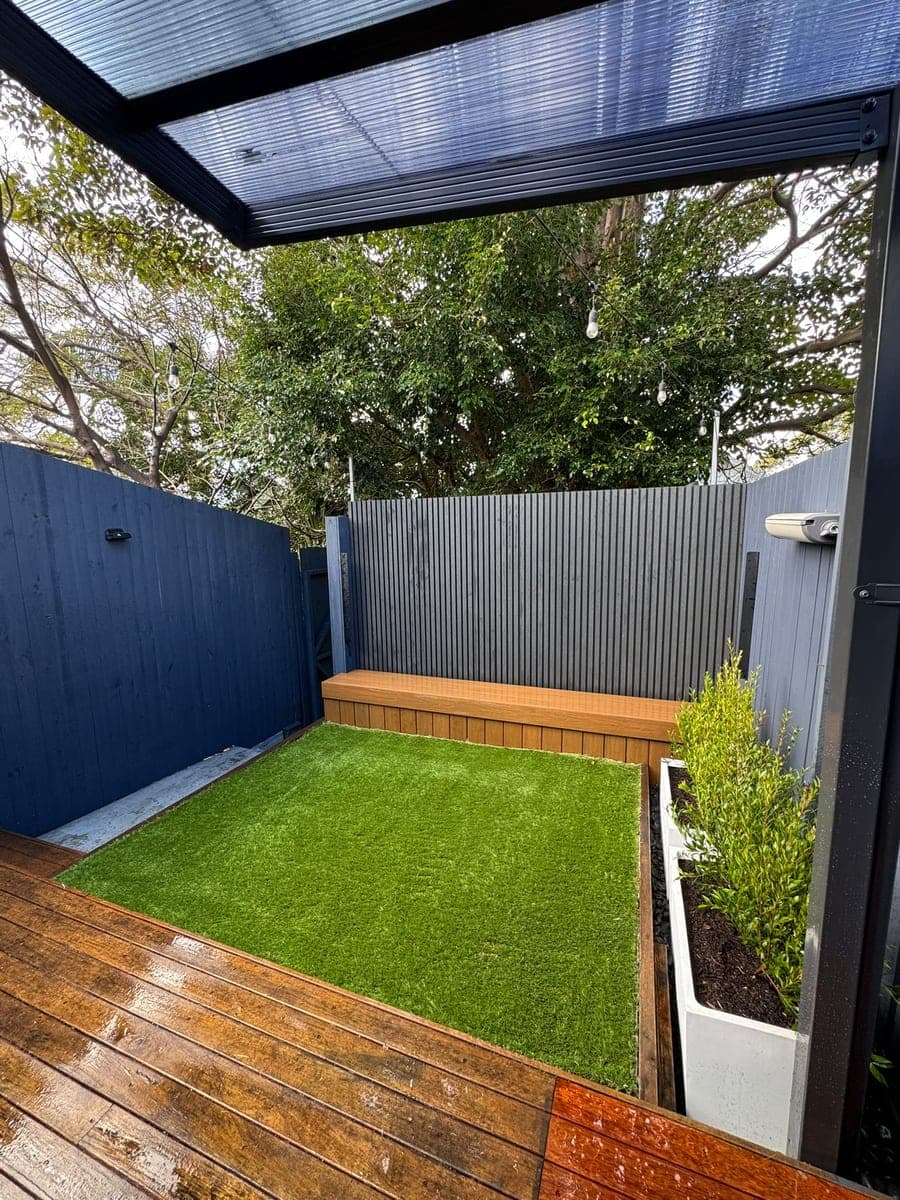
A built-in seat can leave the centre more open while giving the garden a definite place to sit. It needs comfortable dimensions and room to move past it. Where it adjoins a planter, the structure, soil volume and drainage must be considered together.
The Birchgrove courtyard makeover combines built-in seating, rendered planters, screening and garden surfaces. Its layout shows several functions working together within a compact footprint.
Choose surfaces for their use
| Area | Options to consider |
|---|---|
| Outdoor table | A stable, suitably sized paved or decked surface |
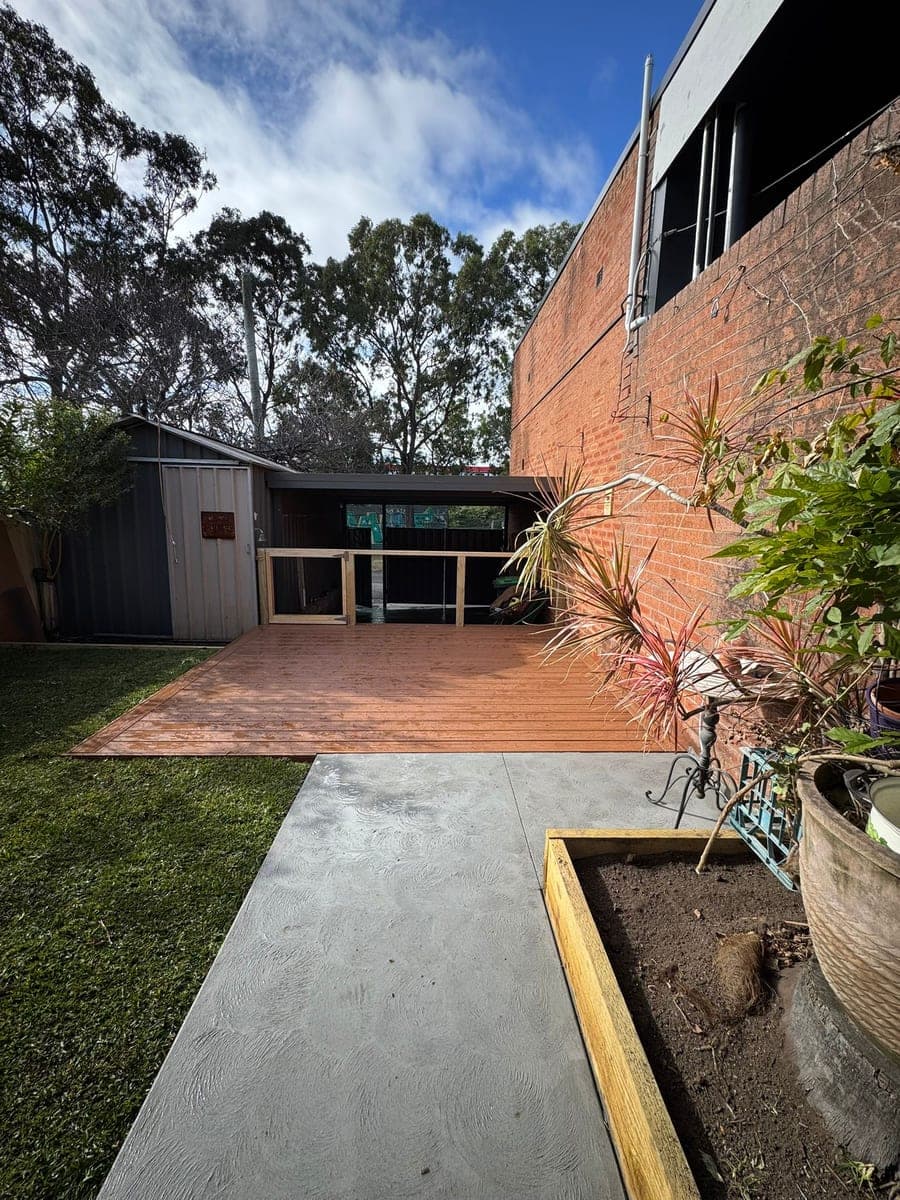
| Route to bins or storage | A continuous path where wheels need to pass |
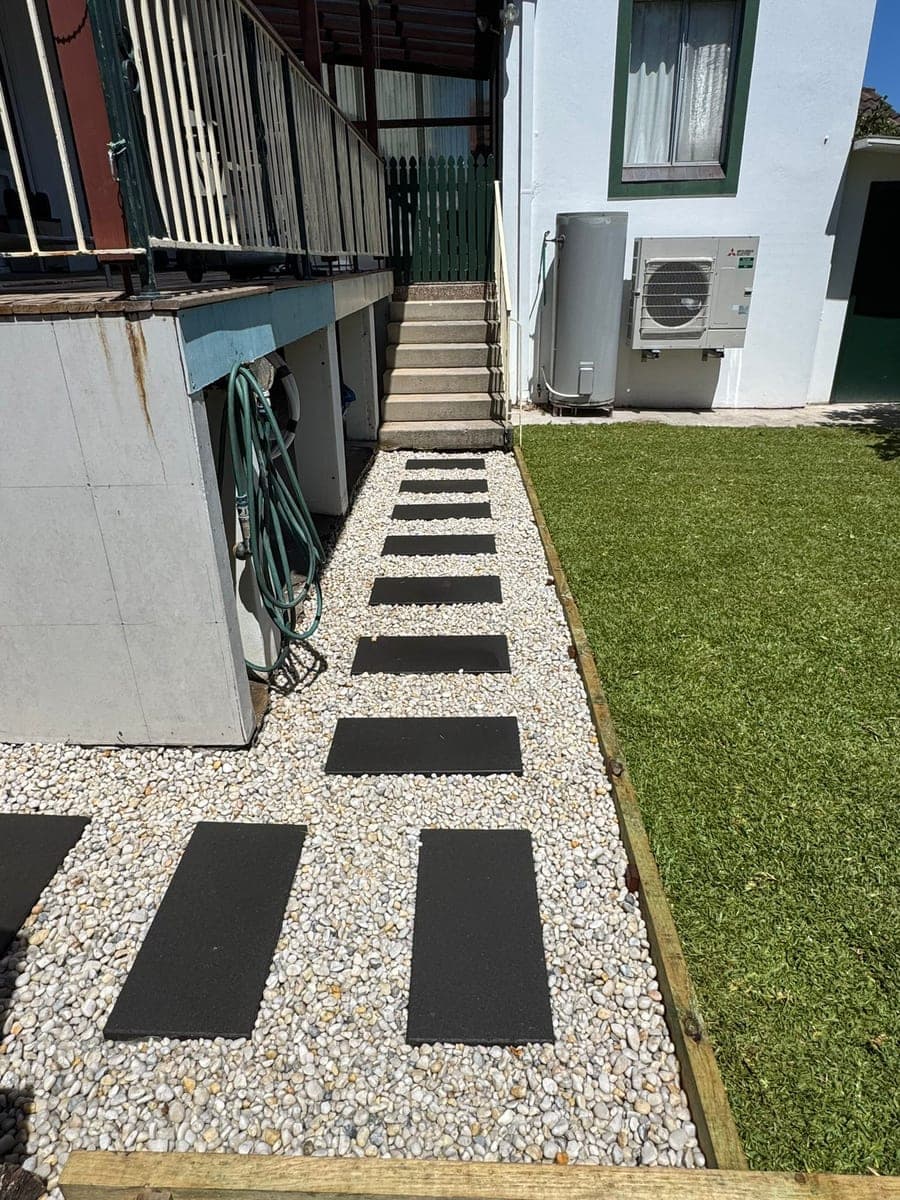
| Occasional walking route | Stepping stones where spacing and footing suit the users |
| Open green area | Natural turf where growing conditions suit, or artificial turf with its care and heat trade-offs |
| Unused corner | Planting suited to the light and available soil |
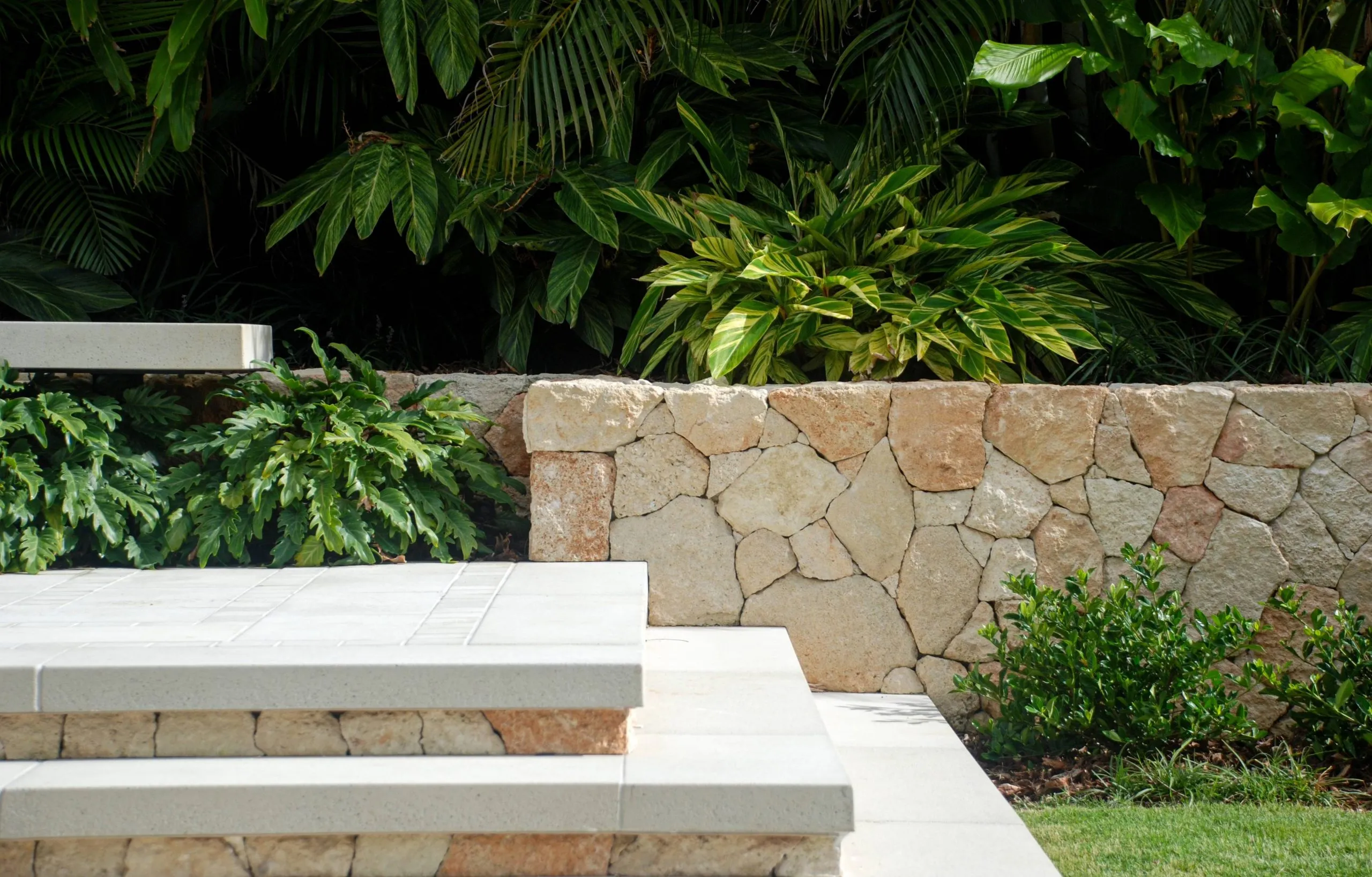
A surface that looks good in a photograph may not suit the way your courtyard is used. Drainage, wet grip and maintenance need consideration alongside colour.
Give planting room without crowding the garden
Choose for mature size, sunlight and soil space. A few appropriate plants can be more manageable than many plants that quickly crowd one another. Climbers and built-in beds can add greenery vertically or along an edge, but still need root space, support and care.
For privacy, screen the view that matters rather than enclosing every boundary. This can preserve daylight and openness around the sitting area.
Keep useful existing features
A sound surface or healthy plant can be part of the new garden. Assess what works before deciding on removal. Changes to beds, edges or seating may be enough, while another courtyard may need a wider rebuild.
The Rozelle transformation is another genuine compact-space example, with seating, screening and artificial lawn. Compare its layout with Birchgrove to see different ways of arranging outdoor uses rather than copying one finish.
A landscape design can help resolve the layout, and outdoor makeovers can bring the selected changes together.