Table of Contents
Privacy is most useful where you spend time: at a table, on a seat or just outside the back door. Before choosing a tall hedge or screen, identify the particular view you want to block and the light you want to keep.
Start with the sightline
Look from the proposed seating position towards the neighbouring window, balcony or boundary. The height and direction of that view affect where a screen belongs. A screen close to the seat may achieve a different result from planting along the far boundary.
Check how the proposed screen affects daylight, airflow and movement through the garden. Enclosing every edge can reduce the space available for the people and plants inside it.
Choose between planting and built screening
| Option | Useful for | Consider before choosing |
|---|---|---|
| Hedge or taller shrubs | A planted boundary with foliage and depth | Mature width, soil space, light, watering and pruning |
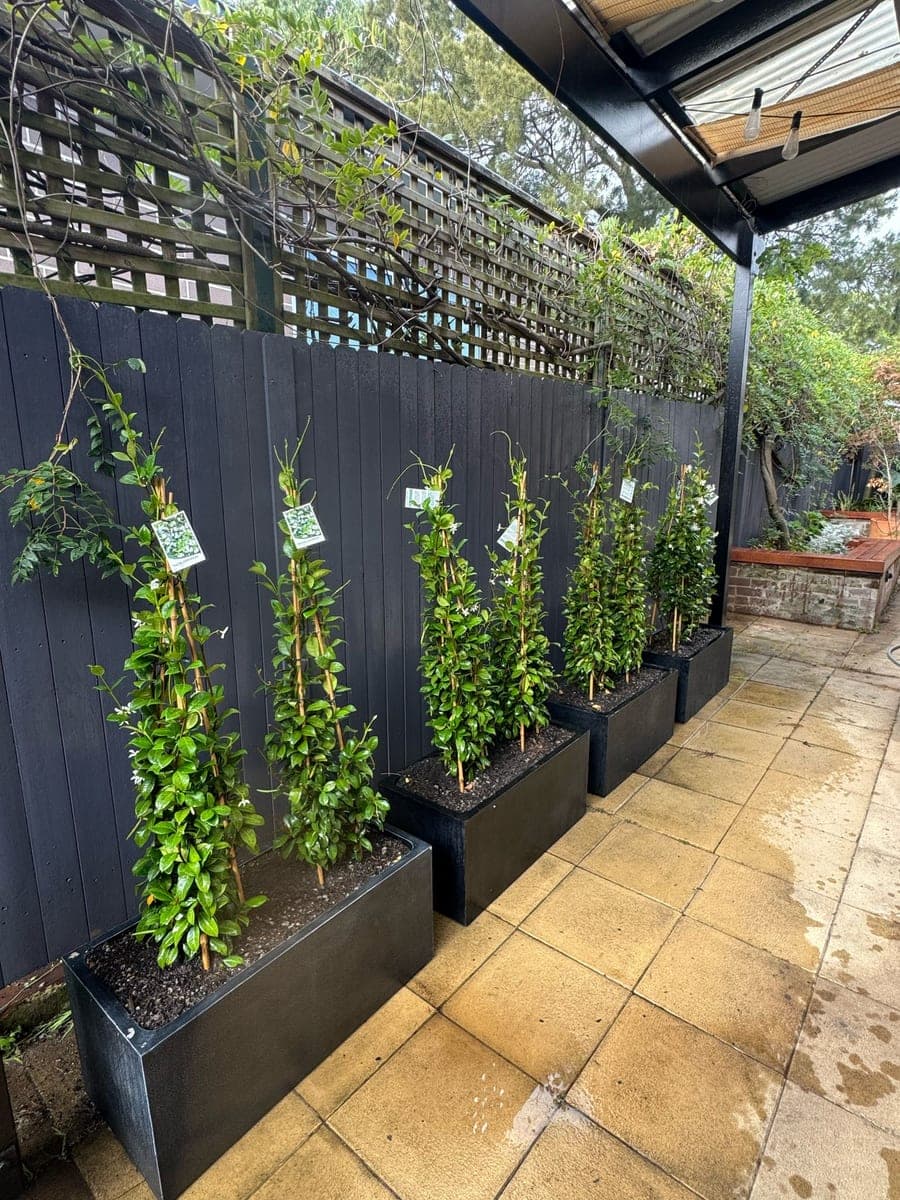
| Climbers on a support | Bringing greenery to a vertical surface | Suitable support, plant habit, coverage time and ongoing care |
| Built screen | A defined screen in a specific position | Height, gaps, wind loading, fixing and applicable approvals |
| Built-in planter with screening plants | Growing space beside a paved area | Soil volume, drainage, watering and the structure beneath |
Planting provides visual screening. It should not be promised as soundproofing; reducing noise may require a different assessment and treatment.
An Enmore example
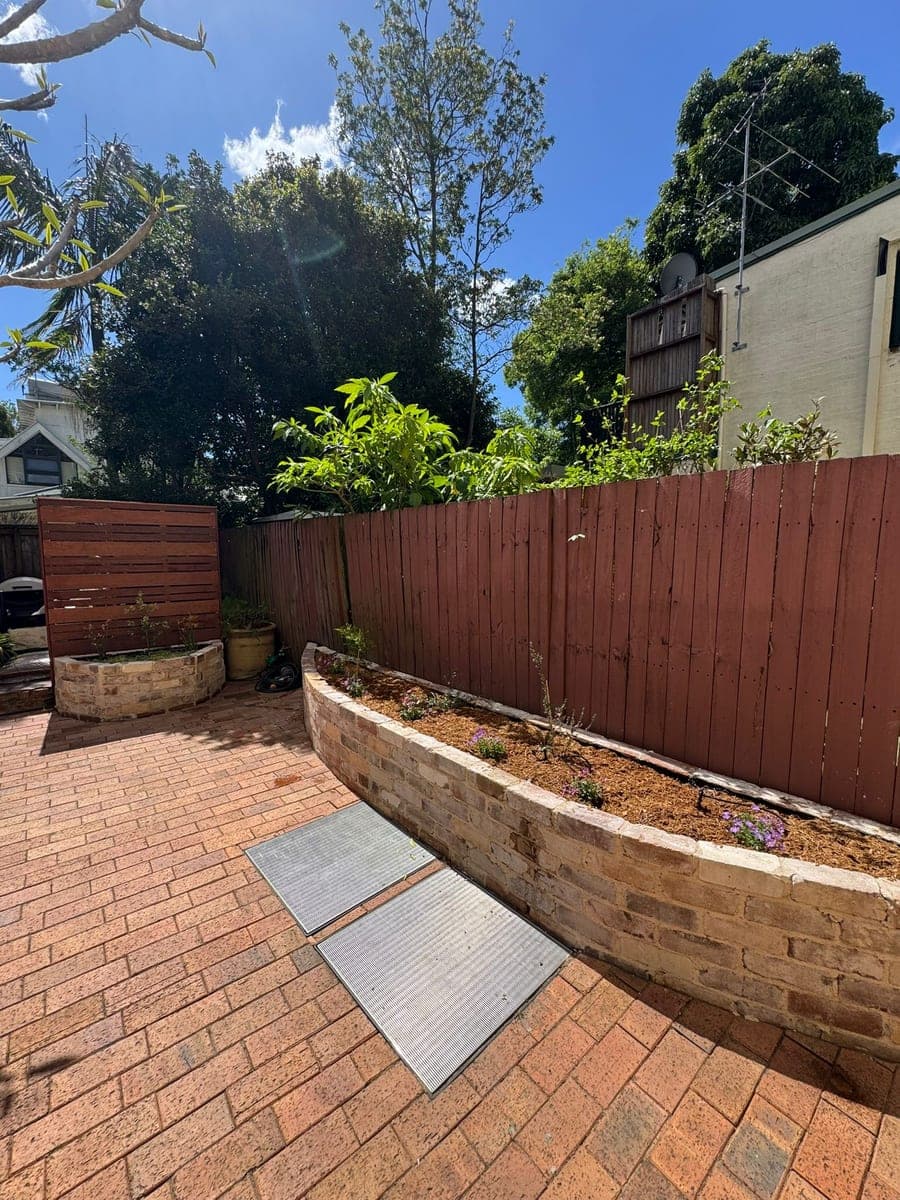
Outdoor Blitz’s Enmore backyard makeover combined built-in seating with planting and climbing greenery along the boundary. The planting was part of the sitting area, rather than a separate feature added after the rest of the courtyard was finished.
The Birchgrove courtyard also shows screening placed alongside seating and garden surfaces. These projects are useful references for layout, but their dimensions and materials should not be copied without checking your own property.
Allow room for the plants to grow
A narrow planter does not automatically support a tall hedge. Choose the planting with its mature size, root space and available light in mind, then size the growing area around it. Include access for watering and pruning so the screen can be cared for once it fills out.
Healthy existing plants may already provide part of the privacy you want. Assess what can stay before clearing the boundary.
Plan privacy with the outdoor area
Screening, seating and planting affect one another. A garden layout can establish their positions together, while garden landscaping can provide the planting and growing conditions. Allow for mature plant growth so screening does not crowd the seating or main route through the garden.