Garden paths and side access
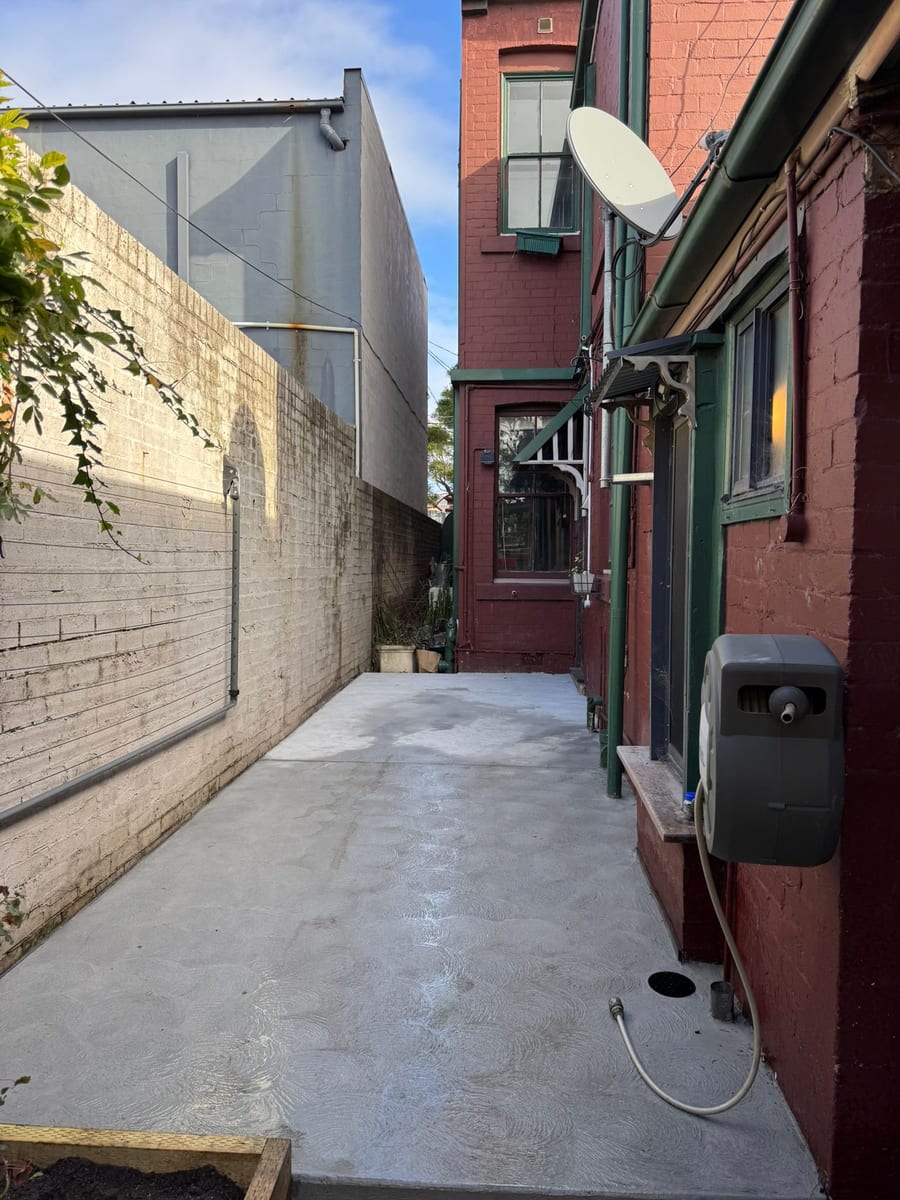
The run from the front gate to the back yard carries bins, bikes and deliveries. Width, falls and a surface that stays usable when wet matter more than anything decorative.

Concrete garden paths, side access, landings and outdoor pads, planned for the people, bins and everyday traffic using them.
Overview
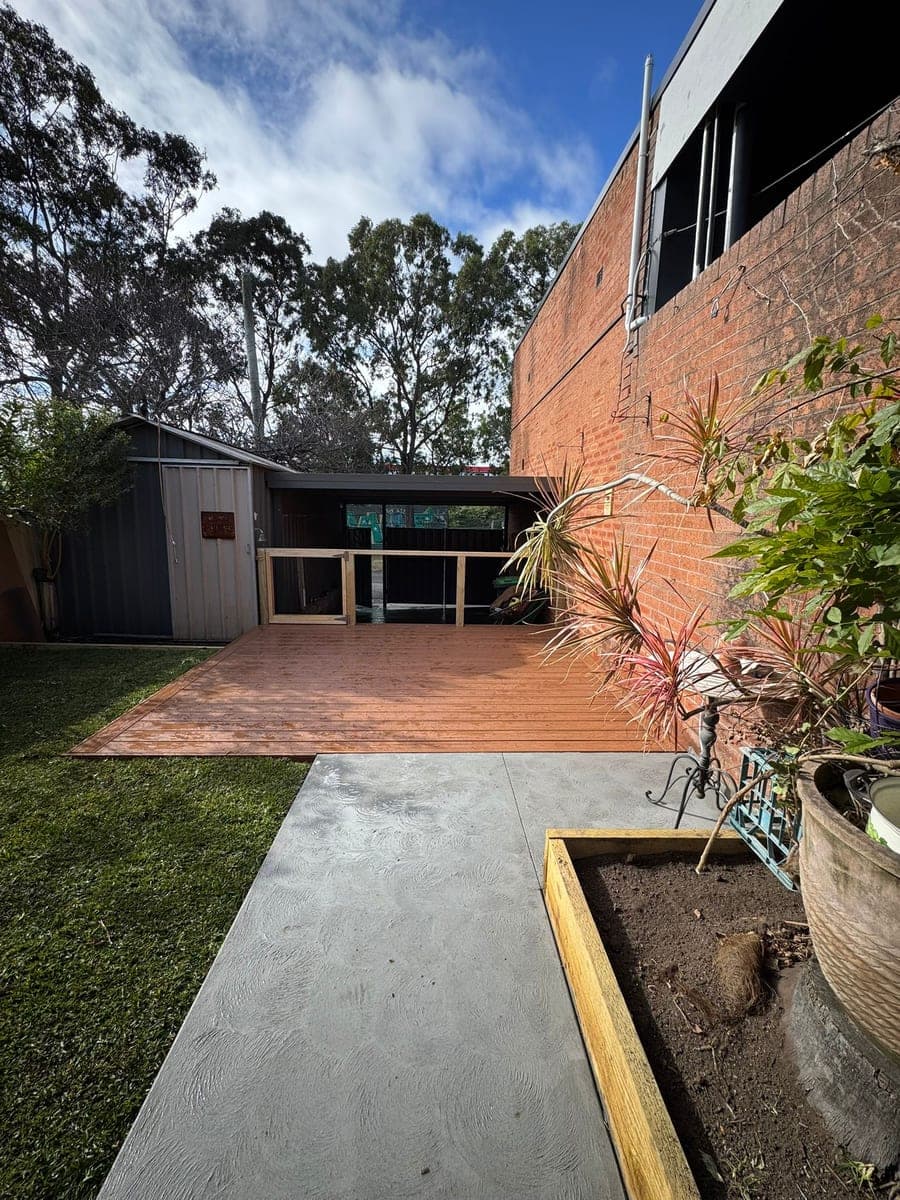
A continuous path can make it easier to move bins, bikes or a wheelbarrow through the property. Landings and garden pads provide usable surfaces at doors, storage areas and other outdoor destinations. Width, finish and drainage are considered with the surrounding garden.
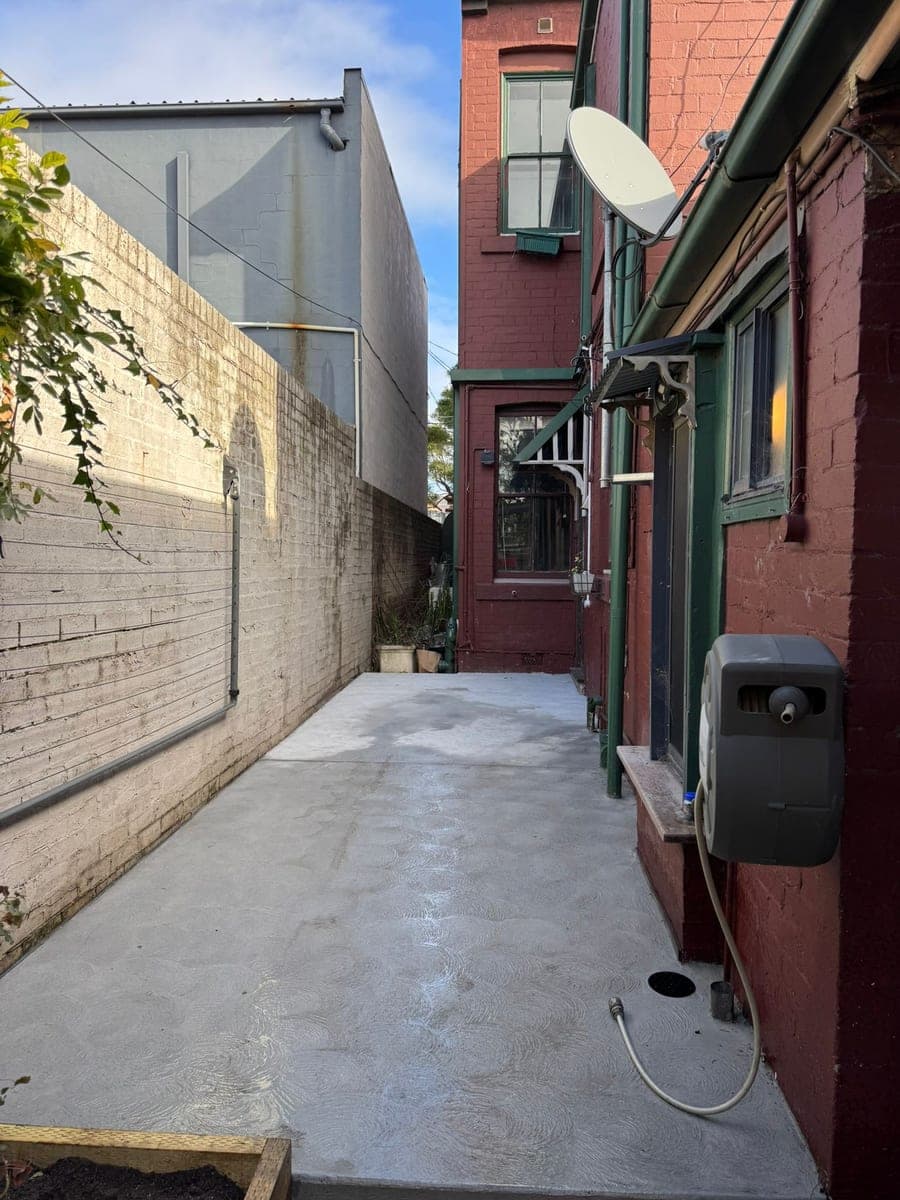
The Tempe backyard makeover included poured concrete side paths alongside the deck, lawn and planters. This is landscape concreting; paving uses separate units and may be another option where the layout or finish calls for it.
This is concrete inside a garden: paths, landings and outdoor pads. Driveways and generic slabs are not work Outdoor Blitz takes on.
What the work covers
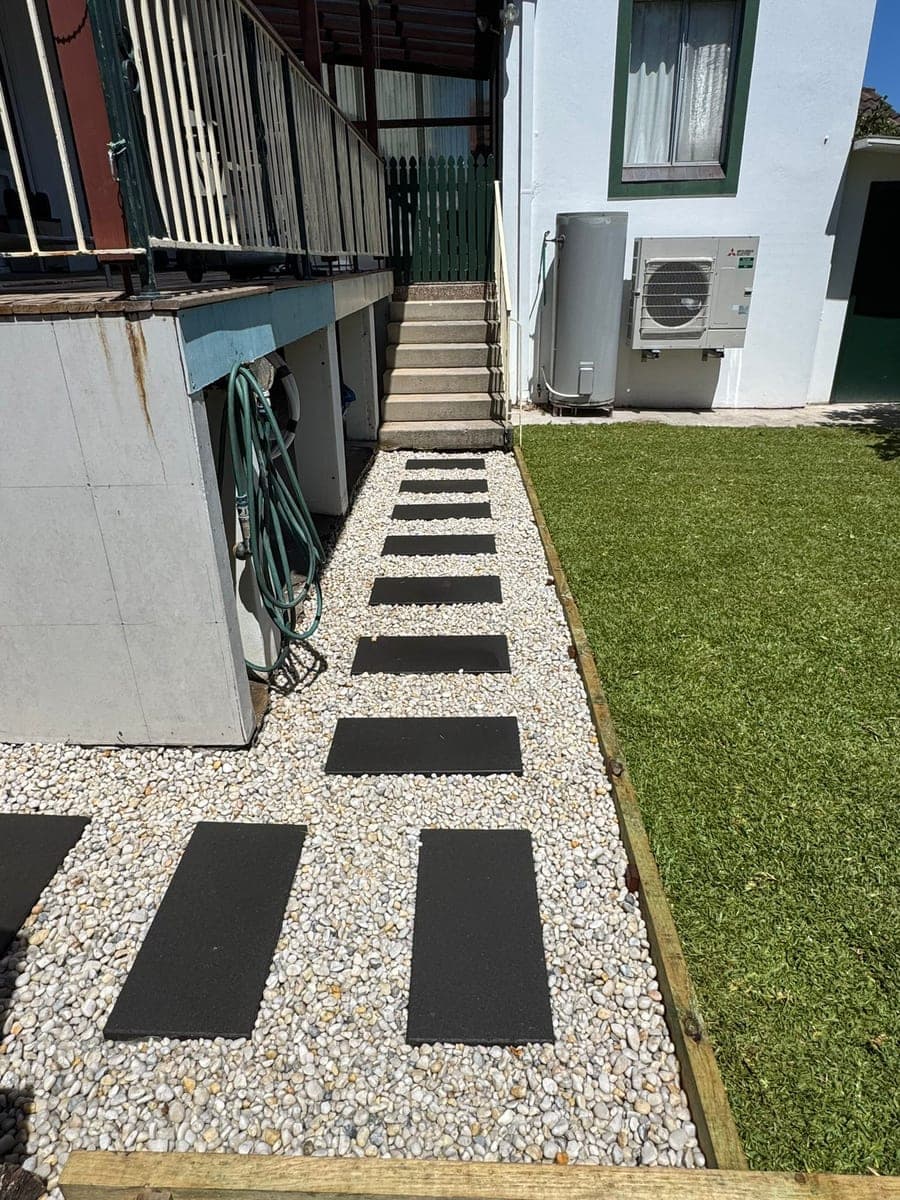
The run from the front gate to the back yard carries bins, bikes and deliveries. Width, falls and a surface that stays usable when wet matter more than anything decorative.
A pad under a shed, a bin store, a clothesline or a step out from a door, sized to what actually sits on it rather than poured to fill a corner.
Surfaces are graded so water leaves the house and does not pond against paving edges, garden beds or a neighbouring boundary.
Joint layout helps manage shrinkage and movement. Base preparation, reinforcement where required, curing and the concrete specification also matter; joints do not guarantee a crack-free surface.
Broom, trowel and exposed finishes give different grip and different appearances. The choice is made against the fall, the shade and how wet the surface gets.
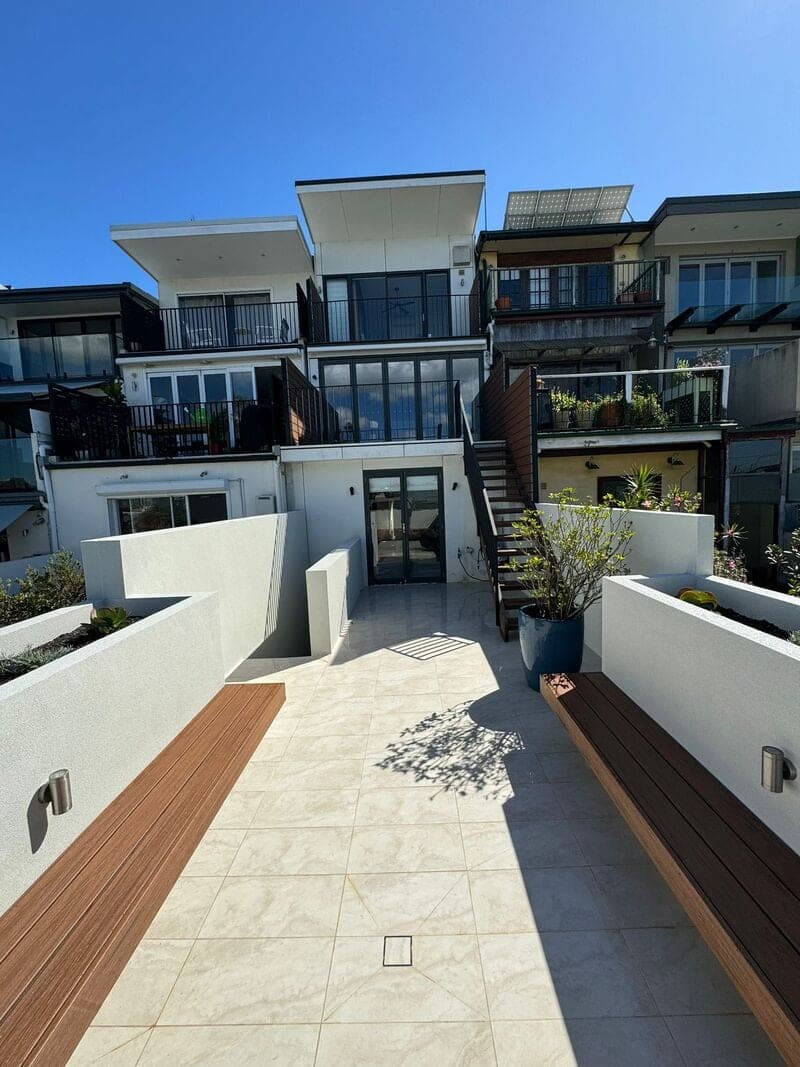
Where concrete meets turf, mulch, decking or a door threshold, the level and edge detail are planned to reduce abrupt changes and allow suitable access and mowing.
Completed work
How it works
We look at how people move through the property, where water currently goes and what the surrounding levels are before deciding where concrete belongs.
Widths, edges, step heights, grades and the joint pattern are marked out, along with the finish, so nothing is being decided while the truck is on the way.
Ground is excavated and compacted, formwork and reinforcement go in, then the pour is finished and jointed to the set-out.
Edges are backfilled and finished against turf, mulch or paving so the concrete sits into the yard rather than standing proud of it.
Customer reviews
Common questions
Cracking can occur even with appropriate construction. Joints help manage movement and shrinkage, alongside suitable preparation, reinforcement and curing. Their position and the expected finish should be discussed before the pour.
It depends on grip. A shaded, damp path wants texture; a covered landing can be smoother. We look at fall, shade and use before recommending a finish.
Wide enough for what has to go along it. Bins, a wheelbarrow and building material all set different minimums, and the side passage width often decides the answer for you.
No. Driveways and generic slabs are not work we take on. We build garden paths, landings and outdoor pads, with levels and drainage planned around the house and adjoining garden.
Planning guides
Where we work
Tell us where you need a path, landing or garden pad and how it will be used.